Showing posts with label offbeat magazine. Show all posts

Friday, July 12, 2013

Watch: Offbeat's Bloody Sunday Session with Davell Crawford

It’s officially summer in New Orleans. What better way to spend a balmy Sunday afternoon than cruising in a slow roll carriage ride through the Crescent City and playing music about our lazy Mississippi River, while on your way to get some char-broiled oysters? Join pianist, vocalist, composer and arranger, Davell Crawford in doing just that here…


The Bloody Sunday Sessions music video series releases its latest edition this week featuring Davell Crawford and his all-star band performing an acoustic version of his song, “River” live from the back of a horse-drawn carriage ride. If you’ve noticed a full-fledge film crew rolling around town on Sunday afternoons with New Orleans musicians doing their thing inside such a carriage, you’ve likely witnessed the making of a Bloody Sunday Session.

With a dozen music videos in the bag already, and a slew of new ones up their sleeves set for release well into the fall, you can expect lazy musical Sundays fueled with a few bloody marys to be a regular part of NOLA life for weeks to come. Stay tuned to OffBeat.com for advance, exclusive new releases soon. For now, enjoy “River” above before its official release later this month and see if you can spot the musical stars in the wagon!

It’s New Orleans – Who needs gas when you’ve got a horse, a carriage and bloody marys?

CREDITS:

Davell Crawford – Vocals
Charmaine Neville – Percussion
Bryant Simmons – Guitar
Joe Dyson, Jr. – Snare Drum
Alexi Marti – Percussion
Stephen J. Gladney – Saxophone

Allen Toussaint Receives National Medal for the Arts from President Obama

Last night President Obama presented Allen Toussaint with a National Medal for the Arts and Humanities. Read more about it in OffBeat Magazine.
 

Thursday, May 23, 2013

First Listen: Exclusive Preview of Kermit Ruffins' New Album "We Partying"

UPDATE:  
LISTEN TO THE ENTIRE ALBUM HERE

All aboard… The release of New Orleans trumpet king Kermit Ruffins‘ latest album We Partying Traditional Style is right around the corner, and while the album isn’t slated to hit the shelves officially until next Tuesday (May 28), OffBeat’s setting it off with an exclusive streaming listen of the full track, “Over the Waves.” 

LISTEN to "Over the Waves" HERE


LISTEN to "When the Saints Go Marching In" HERE


Since the release of 2010′s Happy Talk, the musician/actor/entrepreneur/New Orleans ambassador has been on a quite a roll, barbecuing at Vaughn’s, moonlighting on HBO’s Treme, purchasing and planning for the reopening of the Mother-in-Law Lounge, and running his own joint, Kermit’s Treme Speakeasy. Produced by Grammy winner Tracey Freeman, the buoyant bustle and ebullient swing of We Partying Traditional Style exquisitely captures Ruffins’ grand vision, unsinkable spirit and timeless tone. Follow the swooning waltz-turned barroom shuffle, “Over the Waves” below for a quick glimpse, and get ready for Ruffins’ release party at Tipitina’s next Saturday (June 8).


Friday, March 22, 2013

Listen: Look-Ka Py Py Podcast (ep 28): Anders Osborne, Right at Home


Anders Osborne, Look Ka Py Py Podcast, photo Aaron Lafont


 Swedish-native Anders Osborne first set foot in New Orleans in 1985, and almost instantly, the city compelled the young, wayward drifter to change his course. After landing a spot opening for Earl King at Tipitina’s, the songwriter/guitarist knew he had found his place. For Osborne, the freedom of playing in the moment transcended the stage and revealed to him a side of life that he had long since sought. In the years that followed, through high times and hard times — from shedding at Checkpoint Charlie’s in the late-80s to all but bottoming out in the wake of Hurricane Katrina — Osborne has come to find in the sentiment a wellspring of strength, solace, inspiration and inner peace. With an new EP just out, a long-player in the works and rigorous touring schedule on the horizon, the relentless roots rock workhorse rarely has a second to himself… but he isn’t reeling; he’s right at home. In this week’s episode of OffBeat’s Look-Ka Py Py Podcast, he takes us inside. Listen up…

Friday, November 30, 2012

Offbeat Podcast: Alex McMurray’s Inner Vision


“The people that drive you crazy — the only people that can really drive you nuts are the people that love you,” a soft-spoken Alex McMurray tells host Zachary Young in this week’s episode of OffBeat’s Look-Ka Py Py Podcast. “They’re going to be the ones that help you,” he goes on to reveal. Here, McMurray’s describing the theme of “Diamonds in Your Hand,” the song that seals his recent release I Will Never Be Alone in This Land.

Alex McMurray, press photo

For the singer-songwriter/guitarist, uncovering the subtle truths that belie such paradoxes has become an art — an unheralded attribute that has underscored his musical sensibilities since the mid-Nineties when his then outfit Royal Fingerbowl stirred the Frenchmen scene and stole a fleeting wink from the public eye.

But as the saying a fool’s paradise is a wise man’s hell goes, after a short-lived brush with the national spotlight, McMurray followed his instincts, honing his craft and finding his calling on the streets of St. Claude. On I Will Never Will Never Be Alone in This Land, never before has McMurray’s telltale Chilton-esque wit and wisdom shown more brightly. And, as the story would have it, with a bevy of New Orleans’ best such as Jon Cleary, John Mooney, Ben Ellman, Matt Perrine and more than a dozen others along for the ride, never before has a record of his sounded more New Orleans — “[not] like red beans and rice… maybe some other kind of lunch special,” he muses. Hear how it came to light:

Thursday, April 5, 2012

Offbeat: Big Freedia Booty Battle Video Game: Bounce for the Glory

 
 Big Freedia and Vice Magazine to create “Big Freedia Booty Battle”, an online video game. There have been a couple New Orleans bands whose songs have been featured in video games, but I’m pretty certain this is the first time a New Orleans artist has been the subject of a video game herself.

The game starts with selecting your own character. I went with the girl second from the right because her hairdo, white thong, and immense posterior made her look more like a sumo wrestler than p-popper. The music—Big Freedia’s “Booty-Whop” (a perfect choice with its Nintendo-style midi samples courtesy of BlaqNmilD)—drops in, and you’re told to get ready, but like at a real bounce show, the warning doesn’t prepare you for the speed and intensity of what follows.
You can make your own booty whop at bigfreedia.com/bootybattle.

In Pictures: Dr. John: A Louis Armstrong Tribute at Brooklyn Academy of Music


CLICK PHOTO FOR MORE PICTURES:


All photos are by Dino Perrucci.
The coming weekend’s concerts, “Locked Down”, feature Dr. John with his new album’s producer, the Black Keys’ guitarist Dan Auerbach, previewing songs from the record. The final weekend of shows is themed “Funky But It’s Nu Awlins”, and features guests Irma Thomas, Ivan Neville, Dirty Dozen Brass Band, Nicholas Payton, Davell Crawford, and Donald Harrison.

Tuesday, February 7, 2012

New Music: Galactic Says It’s Carnival Time

  • On its new Carnivale Electricos, Galactic rearranges one of Mardi Gras’ signature songs – “Carnival Time” – and brings along the man who wrote it and made if famous, Al “Carnival Time” Johnson. The album is due out on Fat Tuesday – February 21 – but since parades have started and it is Carnival Time, the band has given us the song as a download to preview the album.
  •  

Sunday, April 3, 2011

Free EP Download: Big Freedia (NolaBounce)

by Alex Rawls

Scion A/V Presents: Big Freedia by ScionAV

Big Freedia also got love at RollingStone.com recently, where writer Chuck Eddy considered the local bounce rapper one of the highlights of his SXSW:


Probably this writer’s favorite SXSW set: Towering transvestite New Orleans bounce-rapper Big Freedia, resplendent in red leather above white T-shirt and spangly bracelets and below sparkling Christmas-tree-ornament earrings and long ponytail extensions, channeling Little Richard on a stage that could’ve been in small-town church basement, with late sainted bounce-rapper Magnolia Shorty’s picture on the DJ table. Male and female dancers – the latter looking like she just stepped out of a La Grange cathouse, with huge painted-on eyelashes – helped Big Freedia roll rump-cheeks in the crowd’s direction. The raps were ebullient chants, really: “Spicey! He really like me! His old lady! She wanna fight me!” “I got that gin in my system! Somebody gonna be my victim!” Before it was over, much of the audience had taken Big Freedia up on an offer to join him/her up there on stage.


Monday, November 29, 2010

Download: Nicholas Payton's new "Bitches" Mixtape

Payton’s voice, not his trumpet, dominates Bitches, which also features guest vocalists Esperanza Spalding, N’dambi, Saunders Sermons and Chinah Blac. It’s in the mode of Sonic Trance partially in its borrowings from the fusion musical vocabulary, and in its break from what is expected of Payton.

Payton had Davis’ album in mind while making “Bitches,” he said, “because this is such a departure for me. Like ‘Bitches Brew’ was for Miles. It’s a similar sharp turn in my musical career.” (As for the provocative nature of the title, Payton says, “I figure if Miles can do ‘Bitches Brew,’ then 40 years later I can do just ‘Bitches.’”)

Payton posted a download link to the album this weekend.

Saturday, October 30, 2010

Offbeat New Album Reviews

By Brian Boyles on trumpeters

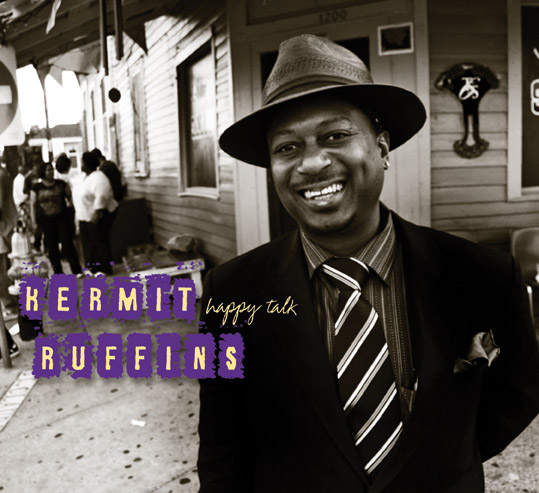
Kermit Ruffins, Happy Talk (Basin Street Records)
In 2007, Kermit Ruffins got married in Woldenberg Park during the French Quarter Festival. As his beloved bride Juicee mounted the stage, Kermit and the fellas pointed their horns in her direction and the audience roared. Just as things hit a crescendo, the Steamboat Natchez passed and blew its whistle. It was another epically sweet moment when you re-appreciate our intimacy with music. Grinning in of that bond for four decades now, Kermit is family.

I’d bet you a hot sausage that more New Orleanians per capita have stories about Kermit than any living musician. I thought David Simon said something when he talked about the city as a moment factory. Of course, unlike HBO, you and I can’t predict the moments’ arrival or if they’ll be punctuated with gunshots, and anyway, they don’t last. Fortunately for us (and Simon), Kermit is a foreman in that factory.

Remember Henri the emcee! Remember Emile the stone-faced pianist! Remember when No Limit decked out the band in football jerseys! All of us have been vipers, all aboard,all fo’shiggedy. These are unquantifiable,unrecorded gifts from our most public artist, whose voice isn’t perfect pitch but who’ll be there every week, telling you that New Orleans is home. Bumper-stickered out as that sentiment may be, it remains 100 percent fresh and heartfelt when Kermit growls it.

Like many recordings by seminal locals, these tracks only suggest the value of the artist—a temporarily detached from his environment and acoustics, perfectly produced piece of a man, but only a piece. You won’t learn anything you didn’t already know (Kermit loves the two Louis, Sinatra and the occasional show tune; he picks good sidemen; his trumpet sounds as fuzzily whimsical as ever).

Things kick off with “Panama,” featuring Mark Mullins and Dr. Michael White romping through the Caribbean flavored standard. (Should Kermit ever record an album of songs from the Southern Hemisphere, we’d learn a lot.) “More Today Than Yesterday” is great. “If I Only Had a Brain” seems long, but it also takes a salsa turn. Kermit’s unflagging dedication to Armstrong makes “Shine” and “La Vie En Rose” convincing, if not all that necessary.

But play a track in your car, or hear one on the radio, and feel your chest swell up with something very necessary: high hopes. The album consists of favorites from masters of sweetness and light like Sam Cooke, Sammy Cahn and Cy Coleman. As interpreters of fancy, of mosey, of the positive go, who’s better than Kermit?

We appear to be at the odd juncture where the roles of neighborhood champ and HBO character can co-exist in a city actively mutating and resolutely committed to its identities. Good for everybody that at least one person remains true and sounds good doing it.

By Jacob Leland on singers

Amanda Shaw, Good Southern Girl (Poorman Mayfield)Updated: Amanda Shaw’s third solo album proclaims, with its title, that it’s about the performer’s identity. That’s just as true of her debut, 2004’s I’m Not a Bubble Gum Pop Princess, but Good Southern Girl represents a more developed personal and musical statement. The new title is obviously intended to be something of a tongue-in-cheek description of Shaw herself, but it finds the artist looking to locate herself with respect to the Louisiana Cajun tradition she grew up with and the Nashville new country and Southern rock traditions towards which bubble gum pop princesses sometimes tend—and where they find mainstream success.

Good Southern Girlwas produced by Trina Shoemaker, who is perhaps best known for her work with Sheryl Crow on The Globe Sessions (1998) and C’Mon C’Mon (2002). It shouldn’t be a surprise, then, that its drums and guitar, in particular, sound like they come from a Sheryl Crow record. Much of this album feels engineered for radio play and dancing at music festivals, in front of the kind of big stages that more tradition-minded performers usually can’t book. Shaw’s crossover effort bridges the gaps it notices between the various sections of her musical upbringing with aplomb, and its execution is impeccable.

There’s simply no arguing with her performances; she can play the fiddle. She’s precise, confident, and playful in her approach to soloing and, in particular, to the Cajun, Creole, country and traditional pieces sprinkled throughout Good Southern Girl. Traditionalists might wish that she’d kept that work further clear of arena-rock drums, twangy lead guitar and electric bass, but Amanda Shaw—good Southern girl though she may be—is 19 years old. She’s justifiably more interested in evolution and experimentation than in preservation.


By Ben Berman on Tony Hall

Dumpstaphunk, Everybody Want Sum
Quick. Think of the worst smelling spot in New Orleans. Funkier than that one unfortunate spot of land at The Fly right behind the elephant patch at the Audubon Zoo. Think the intersection of Bourbon and Conti during Mardi Gras, and then think of the receptacles those trash heaps get thrown into.

Dumpstaphunk is that funky.

Right off the bat, the verses in the opener “Sheez Music” trigger memories of Brothers Johnson’s “Ain’t We Funkin’ Now” with the involuntary leg motions to match. Most folks by now know the sheer power of Dumpstaphunk’s live show, but this track and others here sound huge coming out of the Maple Leaf’s house speakers between sets at their Sunday crawfish boils.

Some might take the Neville bait and compare Everybody Want Sum to the Meters’ later Warner Brothers albums, New Directions and Trick Bag, but a better comparison would be with the city’s other seminal ’70s funk outfit, Chocolate Milk. Like that great group, I thought I liked it most when the band sits back and slinks along in the pocket, as in the third song, “Do Ya.” The tempo lends itself to drummer Raymond Weber’s backbeats and the punchy horns that accent the bridges. But my preference might just be correlation. Ivan Neville’s clavinet and keyboard playing make the track a standout, and it makes you stand up at attention when they burst from that into “Gasman Chronicles” at a velocity faster than the vibrations of one of Nick Daniels’ bouncing bass strings. Raymond Weber plays drums on this workout like a funk robot programmed with Swiss precision to play 150 bpm breakbeats. If you make it through all five-plus minutes you’ll be doing that James Brown grunt, too.

If the album were a Dumpstaphunk concert at Tip’s, the song “Oughta Know Better” is when you would walk to one of the bars and replace your beer. But much of that feeling is impatience to get to the Zigaboo Modeliste-penned “Standin’ in Your Stuff,” and especially to its ascending-to-descending harmonies in the chorus. The guest horn section is a welcome addition on this one, lending those choruses, breaks, bridges and transitions even more muscle, like a sixth 400-pounder on an offensive line.

Bottom line—this is a party album. It’ll sound great when someone plays it on St. Charles before a Mardi Gras parade. The feelings of party records often get separated into those that are straightforward/earnest versus others that are ironic/removed, and it seems obvious where Everybody Want Sum stands. But how about this detail: the Producer credit went to Morgus the Magnificent.


By Alex Rawls on singers

Aaron Neville, I Know I’ve Been Changed (EMI Gospel)
In a city of maddening talents, Aaron Neville’s has been one of the most perplexing. His voice is a remarkable instrument that has too often been employed for pedestrian purposes. It’s hard to argue with his drift toward MOR—he’s not getting younger, and underpaid R&B legends are a dime a dozen—but people have wanted something more substantial: The angelic desire of “Tell It Like It Is;” the streetwise grit of “Hercules;” the spirituality of “Amazing Grace.” Next to those, another version of “Everybody Plays the Fool” is likable but disposable.

On I Know I’ve Been Changed, he has put his talents to excellent use. He’s singing gospel, and producer Joe Henry makes Neville’s voice and Allen Toussaint’s piano the focal points of each track. It’s Henry’s least obtrusive production, but you can hear subtle, smart decisions such as the choice to record the tambourines off-mic and with the treble rolled down. That keeps a native percussion instrument in the mix, evokes Mardi Gras Indians, but leaves plenty of room in the treble range for Neville.

The song choices are smart with few obvious selections, but Neville sings each with literal attention to the words. For the title track, he’s almost woozy with the good news, while he sings “Don’t Let Him Ride” as if he’s warning the listener about a trifling woman. Throughout, there’s an appealing buoyancy in his performances beyond his quaver, as if the transcendent subject matter has already lightened his load.

The arrangements don’t blur distinctions between gospel and other genres as much as they unify them. The frameworks reference country, folk and the blues, but Toussaint pulls them together by playing distinctly New Orleans piano accompaniment. His bounce spurs Neville’s inventiveness as a singer and adds a secondary charm to almost every track. His solo in “You’ve Got to Move” is as unexpected as it is compelling.

The blues and New Orleans underpinnings also show Henry’s hand a bit. His productions often treat American roots music as fine art, and here he uses beloved musical contexts to frame another genre—gospel—that has historically been so message-driven that those who don’t believe find it hard to stay with. He doesn’t betray the songs, the message or Neville, though. Instead, by integrating the songs in the history of American music—and particularly African-American music—he puts Aaron’s voice and art in a dynamic context, and one that music fans can easily return to, regardless of their beliefs.


By David Dennis on Young Money

Lil Wayne, I Am Not A Human Being (Cash Money Records)
Absence makes the heart grow fonder, and jail time makes the rapper grow legendary. Lil Wayne’s arrest and subsequent eight-month sentence launched a “Free Weezy” campaign and creepy fan sites where pre-teens send daily love letters to the incarcerated Hot Boy. For an artist that dropped whole albums-worth of material every 12 minutes over the last five years, eight months is a lifetime. Finally, fans are salivating for new Lil Wayne material. I Am Not a Human Being gives them what they want. Sort of.

I Am Not a Human Being is a collection of songs that were left over from previous projects and obviously recorded months ago. The album is a breath of fresh air for those missing Weezy’s non-sequiturs, wacky voices and nimble flow. Though plenty of Young Money cohorts pop up for forgettable cameos, this is Lil Wayne’s world as he runs roughshod over the bass-heavy “Bill Gates” and double-time snares of “Hold Up (featuring T. Streets)” where Wayne raps “Pussy in the bedroom / pass that bitch down like an heirloom.”

While Wayne’s been off on his federally-sponsored trip to Mars, a few of his lyrical tricks have become dated. Over the past few months, Drake has all but buried the inverted metaphor (“Faded off the brown…Nino / Come and find me…Nemo”) to the point of making it obsolete. I Am Not a Human Being uses this trope a few times, with each serving as a reminder that these are indeed cutting room floor tracks recorded almost a year ago.

I Am Not a Human Being is a serviceable project that reminds us just how unique Lil Wayne is as an artist and personality. It’s also clear that the work is only a taste of his B-material, getting us ready for when Weezy is finally free to begin working on a real in-studio project. November can’t come soon enough.


By John Swenson on rock

Andy J. Forest, NOtown Story: The Triumph of Turmoil
If you’re a musician or band that makes a living in live performance, you probably have always wanted to make that killer live album that captures the magic of your best nights. But the best moments of live performance are almost always left in the setting where they occur, which is why some of the biggest names in New Orleans music have made inferior live albums. Recordings have their own mojo, and while many musicians use the studio conceptually, some are able to create a simulacrum of what they can achieve in live performance in a studio setting. The key is not the energy of the playing itself, and it’s defnitely not the interaction with listeners. It’s a subtle alchemy of the right material presented at the right pace and recorded with a precision that presents its own version of the excitement people associate with live performance. Creedence Clearwater Revival and the J. Geils Band made careers out of being able to cut records like that.

Andy J. Forest’s NOtown Story goes for this effect and for the most part pulls it off. While it won’t be confused with CCR or Bloodshot, it manages to achieve the aural equivalent of trompe l’oeil by simulating the excitement of Forest at his best in a club setting. The recording of the basic quartet—Forest, guitarist Jack Cole, drummer Allyn Robinson and bassist David Hyde—is crisp and uncluttered, with guitar, harmonica and vocals tipping into the red with a fierce, in-your-face presence. On “True to You,” those three elements come out of the speakers with the force of a Chess side by Muddy Waters with Little Walter on harp.

Forest’s songs tend to scan like novellas; here he keeps his lyrics to the bare minimum, sticking with simple concepts like “Who Are You Tryn’a Fool,” “Pretend We’re Not Pretending” and “You Gotta Pay.” The simplicity is effective as it’s in service of the story of the break-up of Forest’s real-life marriage. Less is definitely more when such situations are rendered in song, and Forest thankfully sticks to generalizations. The hot sex farce “Dogs Chase Cats” offers comic relief halfway through the set, and “The Blues Blues” is a great piece of self-actualization.

Forest is a multi-faceted songwriter who’s written some of the more interesting pieces about New Orleans over the years. This time around he’s letting off some emotional steam. In the process, he’s made what is probably his best-sounding record.


Friday, October 15, 2010

Donna's Bar in New Orleans to reopen — With A New Name

c/o | offBeat.com

Donna’s On Rampart—the old Donna’s Bar & Grill, which closed in August—has been leased by optometrist Dr. Eugene Oppman, who also owns the Carver Theater on Orleans Avenue. Oppman started his optometry career in the Carver Theater in 1987 and operated a clinic there until Hurricane Katrina hit.


Morris Kahn, a tax specialist who’s working with Dr. Oppman to revive Donna’s, says that the new owner has applied for all licenses including one for alcoholic beverages and the so-called “mayoralty permit,” which would allow live music at the club. Kahn says there are structural and plumbing issues which are being addressed currently.


“We’ve applied for the permits, and we’re waiting the required 45 days to see if they’ve been approved,” said Kahn.


Wednesday, August 25, 2010

Rebirth Brass Band Signs With Basin Street Records

c/o Offbeat

Basin Street Records announced today that the Rebirth Brass Band has signed with the label, and will be releasing their first Basin Street album early next year. It won’t be their first recordings with Basin Street—they played with former member and co-founder Kermit Ruffins on 2005’s Throwback. However, the upcoming album will be Rebirth’s first of new material under their own name since 2004’s Rebirth for Life.


Mark Samuels, President of Basin Street Records, states, “There is nothing in the world like going to see Rebirth on a Tuesday night at the Maple Leaf. We are excited to begin what we hope will be a long relationship that is beneficial to both Rebirth and our label.”


If this sounds like the match you’ve been waiting for while patiently waiting on the release of more Rebirth recordings, you’re not alone. As founder and tuba player Phil Frazier says, “This is what New Orleans is all about, the Rebirth Brass Band and Basin Street Records teaming up to release music that’ll make you move and put a smile on your face.


Tuesday, August 24, 2010

A Musical Thank You Note: "Dear New Orleans" Compilation Album


“I have a very low tolerance for hippie bullshit,” says Tim Quirk. “There’s nothing more blind than a do-gooder that is just doing it for their ego or to relieve some kind of guilt. It’s rare to see someone who is just doing good work because they are completely passionate about a cause or set of causes. And that’s why I love Air Traffic Control and people like Erin Potts, and Jordan Hirsch. ”


Dear New Orleans is Air Traffic Control’s musical response to Chris Rose’s “Dear America” letter written shortly after Katrina. Dear New Orleans will be released Tuesday to mark the fifth anniversary of Hurricane Katrina, and it’s part of Air Traffic Control’s ongoing relationship with New Orleans. The non-profit organization working for social justice has brought musicians to New Orleans for retreats, using the city since Katrina as a place to learn how they could use their position to pursue their social justice interests. For the fifth anniversary of Katrina, the organization asked alumni of its retreats to release songs about New Orleans. Over half of the 60 alumni gave permission and many recorded original tracks. OK Go wrote an original song, “Louisiana Land,” that mentions Antoinette K-Doe and other shout-outs to New Orleans. “The Crescent” is a new song by the Wrens, who haven’t put out an album since 2003, and My Morning Jacket included a live cover of “Carnival Time” recorded with the Preservation Hall Jazz Band.


Tim Quirk of Wonderlick – a former VP of Rhapsody and Air Traffic Control alum – can’t believe the response. Usually compilation albums take months of finagling with lawyers and artists. Yet for Dear New Orleans, all the obstacles were removed.


“Not only is it five years after Katrina, but we’ve only been working on this since mid-June. We got 31 tracks in the astonishingly short period of time,” he points out. “These sort of things are usually a licensing nightmare. I’m floored and honored and grateful that we got that many, and it’s a testament to (executive director) Erin (Potts), (director of special programs) Deyden (Tethong), the work they do, and just how profound an experience those retreats can be.”


Since 2006, 60 musicians have flown into Louis Armstrong and bonded over drinks in the French Quarter. They ate at Dooky Chase and spoke to the late Antoinette K-Doe and her stepdaughter at the Mother-In-Law Lounge. They attended standing gigs and watched local masters like George Porter, Jr. show off their skills. They played with Bonerama and experienced what it’s like to be backed up by three trombones. Alumni include Steve Earle, Tom Morello, Alec Ounsworth, Flobots, Nellie McKay and the Mekons’ Jon Langford, who painted the album’s cover.


Nicole Atkins, whose cover of “When the Levee Breaks” with Bonerama is on the album, says, “It was truly one of the most amazing trips I’ve ever taken. It’s the one American musical culture down there.”


Erin Potts describes the retreats as “a coming home for musicians – to be in a place where music is so loved.” She continues, “It’s inspiring to them and a deep musical experience. Also, because of what has happened and not happened with regarding to the rebuilding, the levees, and the recovery, it’s an incredible example of recovery.”


The retreats aren’t only about music. Given that the nature of the program is social justice, the artists are exposed to climate change devastation and Hurricane Katrina’s impact. The retreat’s first meeting always opens with Columnist Chris Rose’s eloquent post-Katrina letter, which Potts calls the retreat’s “entry point.”


“We felt ‘Dear America’ really captured that moment in the country,” says Potts. “It became a way of understanding what was happening.”


The musicians also meet leaders from Sweet Home New Orleans and the Gulf Restoration Network, two organizations that Air Traffic Control works closely with. The Gulf Restoration Network and Sweet Home are the recipients of the proceeds from Dear New Orleans. On Tim Quirk’s 2010 retreat, Jordan Hirsch (who Erin Potts calls a “human encyclopedia” of New Orleans musical history) took the musicians to the 7th Ward and introduced them to Mardi Gras Indians. The Gulf Restoration Network’s Aaron Viles showed them Bayou Bienvenue, the lonely remains of a neighborhood destroyed by flooding after salt water from the Mr. GO canal killed the trees that protected the area. Quirk was deeply affected by the experience, where he connected the dots between climate change devastation and the threat it poses to New Orleans and its music.


Two months after his retreat, Quirk engaged in a brainstorming session with Potts and Deyden Tethong (also from Air Traffic Control) over drinks in Washington, D.C. They were thinking of ways for Air Traffic Control to mark the anniversary of Hurricane Katrina, and Potts threw out the idea of doing an EP.


“I told her, ‘You’ve got 60 alumni. You could have a collection of tracks from almost every artists and have a fantastic collection,’” says Quirk. After leaving Rhapsody, Quirk adopted the idea as his summer project and produced it.


“I just want to give people a soundtrack to do whatever thinking they’re going to do to,” Quirk says. “If that soundtrack happens to place their mind towards a Sweet Home New Orleans or Gulf Restoration Network or New Orleans or inspire them to think of their own way to contribute, all the better. It’s not a requirement, though. If you want to put the record on and drink and dance, you can do that too.”


Dear New Orleans is officially available for download on Tuesday, August 24 at DearNewOrleansMusic.org, iTunes, Amazon.com, Rhapsody and eMusic.com. On Monday, though, it’s on sale at Amazon.com for $2.99.


Track Listing

1. OK Go: “Louisiana Land”

2. The Mendoza Line: “Catch a Collapsing Star”

3. The Nightwatchman (Tom Morello): “Midnight in the City of Destruction”

4. Janet Bean and the Concertina Wire: “My Little Brigadoon”

5. Matt Sweeney and Bonnie “Prince” Billy: “Love in the Hot Afternoon”

6. Paul Sanchez: “Don’t Be Sure” [ft. Shamarr Allen]

7. Alec Ounsworth: “Dr. So and So” [ft. Al "Carnival Time" Johnson and John Boutte]

8. Steve Earle: “Dixieland”

9. Luke Reynolds: “Flood”

10. Jon Langford: “Last Fair Deal Gone Down”

11. Laura Veirs: “I Can See Your Tracks”

12. Vijay Iyer: “Threnody”

13. Jill Sobule: “Where Is Bobby Gentry?”

14. Flobots: “Stand Up”

15. Rebecca Gates: “Doos”

16. The Wrens: “Crescent”

17. Indigo Girls: “Kid Fears” [ft. Brandi Carlile]

18. Timothy Bracy’s Collection Agency: “Matching Scars”

19. Nellie McKay: “Late Again”

20. Blind Pilot: “I Buried a Bone”

21. Mirah: “NOLA” [ft. Thao Nguyen]

22. Allison Moorer: “A Change Is Gonna Come”

23. 2nd Chief David Montana: “The Change of Heart Man”

24. Wonderlick: “The American Way”

25. Bonerama: “Mr. Go”

26. Thao Nguyen and Bonerama: “Body”

27. Erin McKeown and Bonerama: “Blackbirds”

28. Nicole Atkins and Bonerama: “When the Levee Breaks”

29. Mike Mills and Bonerama: “Ohio” [ft. Wayne Kramer and Dave Herlihy]

30. Wayne Kramer and Bonerama: “Kick Out the Jams” [ft. Mike Mills, Erin McKeown, Nicole Atkins, and Martin Perna]

31. My Morning Jacket and the Preservation Hall Jazz Band: “Carnival Time”


Friday, August 20, 2010

Donna’s Bar & Grill Closes

By Jan Ramsey

The last mainstay of live local music on North Rampart Street has closed its doors.


Donna’s Bar & Grill, which has been the home of brass bands for almost 20 years, is closed forever

Donna's: Home of New Orleans Brass Bands.


“We’re done. We turned in our license,” said Donna Poniatowski, for whom the club was named. “When we went to city hall to turn in the license—which is something you’re required to do—the lady who accepted it even told me, ‘You know, now there won’t be any live music on North Rampart Street.’” Donna’s right to present live music was grandfathered in when the city prohibited new Mayoralty licenses (that allow live music). The other establishment that was grandfathered in was the Funky Butt, which closed prior to Katrina.


Donna and her husband, Charlie Sims, opened Donna’s because of their love for local music. Charlie cooked for crowds of people who loved his red beans and rice and barbecue, and in recent years, Charlie ran the club. Donna has been teaching for several years since Katrina, full-time, at schools in Florida, and commuted to and from New Orleans. She told OffBeat in June that while the club took its usual summer hiatus, she was returning home for good because she’d managed to get a teaching position at the University of New Orleans. “I was on my way to New Orleans to sing the contract, and that’s when the [teaching] cuts were made by our ‘wonderful’ governor,” she said. Charlie, who’s now 75, experienced some serious health problems earlier this year.


But according to Donna, the main reason they decided to shut down the club is because of the condition of the building. “The building is in horrible shape,” she said. “We rent the property and couldn’t see investing thousands of dollars into a building that wasn’t ours. With all the rain we’ve had this year, the roof leaks and the ceiling is about ready to fall in. We just couldn’t see putting money into a building we didn’t own. We’ve had so many problems over the years, and the landlord just wasn’t interested in keeping up the building. So while it was a hard decision to shut down Donna’s, we just decided it was not in our best interests, given Charlie’s health and the condition of the building, which is just getting worse. We just couldn’t find anyone who wanted to take over the business, either. I asked Charlie is he wanted to try to find a new location, but his health problems and the fact that I’m in Florida was too difficult, so we both decided that we’re done,” she said. “We’re going to relax and enjoy each other’s company!”


Interestingly, the Funky Butt, which is owned by the same landlord (Cahn Enterprise), closed for the same reason. Sammie and Shanekah Williams were operating the Funky Butt prior to Katrina, but decided to close the business because the building was “falling apart” and needed a totally new HVAC system, which the landlord would not replace. Just prior to Katrina, the Williamses were trying to relocate the Funky Butt to Frenchmen Street, but Katrina squashed that effort.


After Katrina, another operator attempted to reopen the Funky Butt as a music venue but was prevented from doing so because he could not get the proper licenses to allow live music. The same will now apply to any operator who’d want to reopen Donna’s as a music club. So it appears for now—unless the city steps up to the plate and revamps the zoning on North Rampart Street—that music on the historic street that runs next to Armstrong Park and Congo Square is a thing of the past.


From our standpoint, this appears to be a serious problem for the music scene in New Orleans, and the attempts to re-establish North Rampart as a street that permits and honors local traditional music. We’ve discussed this issue many times online and in the pages of OffBeat, and suggest that the property owners on North Rampart, and in the historic areas of the city need to be held accountable for their neglect of their properties. It may not be unlawful to let the interior of an historic property fall into ruin—as long as the façade appears to be intact; it may not be unlawful to enter into a lease with a tenant who can’t afford to make structural repairs to a building that produces income and supports the city’s cultural health and economy. But both actions seem to us to be morally reprehensible and in fact, ultimately damaging to New Orleans historic nature and to the city’s culture.


It’s still hard to believe that a city like New Orleans, known for its music


Wednesday, August 11, 2010

Preview of Kermit Ruffins’ “Happy Talk”


Kermit Ruffins will release his new album, Happy Talk, October 26.
For those who can’t wait, here’s a free mp3 to download:

Thursday, July 29, 2010

DJ Quickie Mart’s New Orleans Funk & Soul Mix

by Kate Russell


Martin Arceneaux, aka DJ Quickie Mart, collected vinyl 45s for years. He played with nearly every bonafide funk band in New Orleans. He suffered through Katrina’s aftermath and continued playing gigs with Kevin O’Day, Galactic, and Dr. John. But Quickie Mart knew New Orleans music traditionalists don’t consider DJ mixes to be legitimate, and that belief bothered him.


“It’s a hard community in New Orleans to convince them that you are, in fact, a New Orleans artist. I wanted the traditionalist community to have something they could enjoy of mine, and for them to know that I know my shit.”


HBO’s Treme was a bittersweet experience for the DJ who had lost everything in Katrina and relocated a few years after to Los Angeles, only to see his friends on the show as featured “real” New Orleans music. The show spurred him to do what he’d been longing to do for years: cut a damn good mix of the New Orleans groove.


“I was in the trenches, I didn’t have a house, I was couch surfing,” Arceneaux says, describing his post-Katrina lifestyle. “I love the show and I love seeing all my friends on it and honestly I just want to be represented now.”


Arceneaux calls “Ask Ya Mom And ‘Nem….QM should be in Tremé” his “tribute” to New Orleans. It’s also a reminder that he’s relevant to the New Orleans scene despite his move to L.A. The mix is an hour and seven minutes worth of all Louisiana artists (save Gil Scott-Heron’s track “Angola, Louisiana”), whose tracks came straight from Arceneaux’s collection of vinyl records. He cut it in a day, seamlessly mixing the mostly seventies funk and soul samples together and weaving in some fine turntablism. It jumps off with a quick scratch, Wild Magnolia chants, and a young girl’s loud Creole calling to her mother, then blends into Mary Jane Hooper’s soulful “I’ve Got Reasons,” and so the fun begins. “Everything on it is old, old school,” says Arceneaux. “Louisiana music touches me more than anything else. I do a lot of hip-hop, but I love funk and soul. I know my history, I know where I came from, I love where I’m from and I’m proud to have been given a chance by Galactic, Rebirth and other groups I’ve played with.”


This mix also does something that many traditionalists fail to do: attract a new generation of New Orleanians to seventies funk, which laid the groundwork for hip-hop. For those of you familiar with Arceneaux’s hip-hop mixes, or his recent Haze Diaries Vol. 3 album, don’t be afraid to check out this mix. While the songs might be decades old, the groove and funk is familiar, with the occasional heavy snare, drum breaks and fun beats.


“The seventies is what popular electronic music stems from today,” Arceneaux explains. “All the drum breaks that you hear on pop, hip-hop and electronic records come from the 70s. It was a huge point for popular music now, and a lot of people don’t realize how huge the sound of the recording studios and the sound of the breaks was.”


He continues, “When I first heard ‘Sexy Back’ on the radio in 2007, I was like, ‘Why is there an Eddie Bo sample on this Timbaland and Justin Timberlake song?’ College kids or whoever was listening to the radio would just think it was Timbaland or somebody.”


This mix proves that Arceneaux really does “know his shit,” which he combines with the technical expertise to cut these old-school samples to make them sound fresh in 2010. Don’t believe it? Check out the mix’s take on “Angola, Louisiana.”

Download the mix free here.


Ask Ya Mom An ‘Nem… (QM’s Treme Mix) by Quickie Mart


Here’s the full tracklist for the mix:

1. Mary Jane Hooper – I’ve Got Reasons
2. Ernie K. Doe – Here Come The Girls
3. Betty Harris – Mean Man
4. Eddie Bo – Hook N Sling
5. The Explosions – Garden Of Four Trees
6. Gil Scott-Heron – Angola, Louisiana
7. The Meters – The Same Old Thing
8. The Gaturs – Cold Bear
9. David Batiste – Funky Soul
10. The Wild Magnolias – Soul, Soul, Soul
11. Robert Parker – Hip Huggin’
12. Sonny Jones – Sissy Walk, Pt. 2
13. Professor Longhair – Big Chief
14. Porgy Jones – Dap
15. The Meters – Just Kissed My Baby
16. Lee Dorsey – Give It Up
17. Allen Toussaint – Get Out My Life Woman
18. Cyril Neville – Gossip
19. Jimmy Hicks – I’m Mr. Big Stuff
20. The Enticers – Thief
21. The Prime Mates – Hot Tamales
22. Al Hirt – Sentries Charge
23. Inell Young – What Do You See In Her?
24. Dixie Cups – Iko Iko
25. The Meters – Lil’ Old Money Maker
26. Warren Lee – Funky Belly
27. Chocolate Milk – Pretty Pimpin’ Willie
28. Aaron Neville – Hercules
29. Dr. John – Familiar Reality
30. The Fantoms – Turn Me On
31. Bonnie & Sheila – You Keep Me Hangin’ On
32. Johnny Moore – Haven’t I Been Good To You
33. Eddie Bo – Showdown
34. Reuben Bell – Superjock
35. The Brother – A Monkey That Became President
36. African Music Machine – Black Water Gold
37. Eddy G. Giles – Soul Feelin’
38. Professor Longhair – Tipitina

Tuesday, May 11, 2010

New Orleans Music A to Z

By Bunny Matthews in Offbeat


If stranded on a desert island and given but two wishes, most Earthlings would opt for food and water. The Orleanian, without thinking twice, would take the food, skip the water (probably carcinogenic anyway) and request some rousing music. It’s a matter of necessity.


Indeed, without the sounds of New Orleans, the planet would be a far more dreary place. During the BBC’s live television coverage of Mardi Gras ‘88, the eminent composer/pianist/producer Allen Toussaint, responding to the question of why New Orleans has had such a profound impact upon the course of popular American music, explained: “This is the birthplace of a lot of good things that have happened — and I say ‘lots’ in more than just jazz, because we’re aloof from the rest of the country — even geographically. Also, our pace — we move at a different pace here and we hold on to certain things longer so the natural links in the chain here from earlier times are still hanging on pretty dearly so I would say things grow up in other places but most of the really fine stuff is born here in New Orleans.”


When Toussaint was asked why these fine New Orleans musicians, when offered large sums of money to perform elsewhere, generally prefer staying in the Crescent City and earning a pittance, his answer was appropriately succinct: “It feels good!”


New Orleans musicians know that when they’re home, they can stop on almost any corner and get a great po-boy or plate of red beans and rice lagniapped with a quarter-pound of pickled pork. They’ve got cousins and aunts and uncles all over town, and they know that when it turns cold, the frosty weather only lasts two or three days – not six months. The most severe damage inflicted by the average winter is the browning of backyard banana “tree” leaves.


Given such a propitious environment, it is understandable that New Orleans musicians — in times as distant as Lee’s surrender — would discard the artistic shackles of sheet music and play what they felt — a revolutionary principle and one that has guided music to the present day.


In the improvisatory spirit of New Orleans music, what follows is a Funky Guide to New Orleans Sounds, listed alphabetically and with no pretense to being complete, authoritative or anything other than the notes of a long-time, vigilant observer from Chris Kenner’s fabled “Land of a Thousand Dances.”


LEE ALLEN – The honkin’ tenor saxophonist on many of the grandest New Orleans rhythm and blues hits, including works by “Fats” Domino, Smiley Lewis and Huey “Piano” Smith. In 1958, Lee had his own hit, “Walking With Mr. Lee.”


LOUIS ARMSTRONG – His first two words, according to his mother, were “Oh Yeah!” When Louis was 13, he “borrowed” his mom’s gun, fired it in the streets as he celebrated New Year’s Eve, was arrested and sent to the Waifs’ Home. At the Waifs’ Home, a sort of early version of the reform school, Louis learned the rudiments of the trumpet and subsequently became the most famous man in the history of jazz.


DAVE BARTHOLOMEW – Squarely behind the success of “Fats” Domino and a host of other New Orleans stars during the ’50s was Dave Bartholomew: bandleader, trumpeter, songwriter and talent scout. According to his pupil, guitarist Earl King, Bartholomew deserves much of the credit for the sound which made New Orleans famous: “A lot of people may think of Dave as a slavedriver but he’s a learning machine. I learned a lot from Dave: how to think about things, the do’s and don’t’s of the studio, things that you can live with without panicking. We get in the studio nowadays, and we think some little trivial things means something to the public, and it really doesn’t. Somebody might stay in there doing 50 takes to perfect something that’s at the end of a song. Dave told me one time, ‘Earl, nobody’s gonna listen to you that long to get back there. If you’ve got a mistake at the end of a record, forget it!’” Or in other words, a little funkiness never hurt nobody!


BUDDY BOLDEN – Considered the True Father of Jazz, Bolden had more than the usual problems of wrestling with reality. When his mother-in-law (See “Ernie K-Doe” entry) got on his nerves, Bolden bashed her in the head with a water pitcher. Committed to the state insane asylum, Bolden died a forgotten man (amateur phenomenonologists will note the obvious parallel to trombonist Don Drummond, the True Father of Reggae, who murdered his sweetheart and died in a Jamaican mental asylum in 1969). The sheer power of Bolden’s trumpet was legendary — the microphone had not yet been invented and Bolden didn’t need one. Entertaining fans on the West Bank of the Mississippi while standing on the East Bank was a common feat. Bolden never recorded and left behind two blurry photographs of himself. His headquarters, during the first decade of this century, was the Funky Butt Hall (which stood on the site of today’s City Hall) and Bolden’s theme song was “Funky Butt, Funky Butt, Take It Away.”


JAMES BOOKER – “Human nature is the reason why I play piano the way I do,” Booker once confessed to this writer. “But not just ordinary human nature – some people say I’m a freak of nature.” Booker, who died in 1983, was also a heroin addict, a graduate of Angola State Penitentiary, a rather flipped-out raconteur, a homosexual and a child prodigy, cutting his first record at 14 under the capable direction of Dave Bartholomew. Booker’s only hit was the organ instrumental “Gonzo,” released in 1960 and named after a character admired in the film “The Pusher.”


CLARENCE “GATEMOUTH” BROWN – “Gatemouth,” a major guitar idol of the ’50s, settled down (sorta) in New Orleans during the mid-70s and worked with a band that would later become LeRoux (of “New Orleans Ladies” fame). With contemporary “Gatemouth,” the musical consumer gets “Gate’s Salty Blues” doused with a syrupy Nashville gravy and the occasional duet with little daughter Renee. To hear the mind-wrecking stuff, consult two compilations of Mr. Brown’s Peacock recordings: San Antonio Ballbuster (Red ‘Lightnin’) and The Original Peacock Recordings (Rounder).

CARBO BROTHERS – Chuck and Chick Carbo led the Spiders, a vocal group produced by Dave Bartholomew, which assaulted the charts in 1954 with “I Didn’t Want To Do It.” Henry Carbo, brother of Chuck and Chick, teamed up with Irma Thomas on Ms. Thomas’ first recording session, shortly before she left junior high school at 14 to give birth to her first child.


DIRTY DOZEN – The Dozen are a modern, souped-up version of the sort of brass band commanded by Buddy Bolden nearly a century ago, proof positive that New Orleans funk transcends time, space and evanescent fashion.


ANTOINE “FATS” DOMINO – “The Fat Man!” In 1949, when “Fats” made his first expedition into the recording studio, he was a day laborer taking home $28 a week. By 1957, his concerts were causing riots among Eisenhower Era teens and “Fats” was collecting $2,500 per recital. Domino’s primary vices are gambling (two million dollars lost over a ten-year period in Las Vegas) and Cadillacs with gold-plated accoutrements (bought with cash, Domino’s preferred medium of exchange). His virtues include an impishly sexy voice and a smile as polished as the glistening tiles of Casamento’s oysterium.


DRUMMERS – The 12 Gods of New Orleans Rhythm: Earl Palmer, Cornelius “Tenoo” Coleman, Clarence “Juny Boy” Brown, John Boudreaux, Joe “Smokey” Johnson, Charles “Hungry” Williams, Joseph “Zigaboo” Modeliste, James Black, Edward. Blackwell, Robert French, Alfred “Uganda” Roberts and Willie Green.


SNOOKS EAGLIN – From funk to flamenco to the blues to the Beatles (“overrated,” in Snooks’ estimation), this blind guitarist is the master of eclecticism. One of the funniest Snooks legends involved his hasty departure from an upstate New York recording session with Professor Longhair because the sound of snow falling outside his bedroom window kept the hypersensitive Snooks awake all night.


FRANKIE FORD – Frankie, along with Mac “Dr. John” Rebennack, was one of the few Caucasians participating in the local rhythm and blues scene during the Fifties. Recording with Huey “Piano” Smith’s band, Frankie cut the immortal “Sea Cruise” and was the closest thing New Orleans had to a Ricky Nelson-style teen idol. As a child, Frankie (real name: Guzzo) appeared on Ted Mack’s Original Amateur Hour, singing “Bacha Mi” n Italian and Wheel of Fortune.


PETE FOUNTAIN – While making no claims to being New Orleans’ most profound musician (a duty best left to Wynton Marsalis, the Young Puritan), Pete is the epitome of what fine Crescent City playing is all about — especially on Mardi Gras morning in the company of his old homeboys, parading through the city streets as the Half-Fast Marching Club, costumed as Ancient Greeks or kilted Scotsmen, refreshing themselves along the way with portable cocktails and kisses from pretty stenographers dressed as Dalmatians and odalisques.


GUITAR SLIM – Born Eddie Lee Jones in Greenwood, Mississippi, Guitar Slim dyed his hair blue, sold his soul to the Devil, surrounded himself with female groupies, and enthralled audiences with his wild and daring guitarisms. In 1959,at the age of 32, he died in the backseat of a New York taxi. Guitar Slim’s million-selling hit “The Things That I Used to Do” was recorded in New Orleans on October 27, 1953. Ray Charles was bailed out of jail by producer Johnny Vincent so that he might supply the accompanying piano. Guitar Slim, Jr. (Rodney Armstrong, Eddie Lee Jones’ natural son) released his first album, “The Story of My Life,” in 1988 and says “Sometimes I feel like he wrote a lot of those songs for me because I live the same kind of life he sang about.”


CLARENCE “FROGMAN” HENRY – Who did the Beatles see when they came to New Orleans? “Frogman!” After decades on Bourbon Street, “Frogman” has “semi-retired” to his Algiers residence and a vast collection of stuffed frogs. (Phenomenology note: “American” Orleanians of the 19th Century called their Creole counterparts “Johnny Crapoud,” or “Johnny the Frog.” The Creoles’ game, invented in New Orleans, thus became known as “craps,” the ultimate shot.)


INDIANS – Black Mardi Gras Indians traditionally don their feathered and beaded “suits” only on Mardi Gras and St. Joseph’s Day, although latter-day revisionist Indians perform at the Jazz Festival, funerals, conventions and the grand openings of health spas. The Indians boast a hierarchy as elaborate as that of Kalala Ilunga’s Luva kingdom, wherin Kalala’s descendants possessed “mystical” blood. In the old days, Indians possessed “bad” blood and spilled much of same; these days, they’re diligent pillars of society (feathers and beads not coming cheap, especially when they’ve got to be shipped down from Brooklyn). The exclusively male tradition of sewing and decorating costumes’ has obvious parallels in African culture, where weaving and sculpting are the sacred domain of males.


JAZZ – It was invented in New Orleans, along with most other forms of popular American music. End of argument. The word “jazz” is derived from the Old Testament “Jezebel,” as prostitutes were once called. Orleanians slurred this into “Jazzbell” and the ladies’ favorite music became known as “jazz.” “Jazz me, daddy!” meant something entirely different.


ERNIE K.DOE – K-Doe’s biggest smash, “Mother-in-Law,” was retrieved by K-Doe from Allen Toussaint’s wastebasket, where Toussaint had tossed the composition, doubtful of its commercial appeal. In 1961, the song rose to the Number One position on Billboard’s pop chart. These days, K-Doe is the reigning court jester of New Orleans music and truly “a legend in his own mind.” And, as K-Doe theorizes, it’s all because he was born at Charity Hospital.


EARL KING – If K-Doe is the court jester of New Orleans, Earl King is the court historian. His “office” is Tastee Donuts Shop Number 58 on Prytania Street, from whence came the title for his Glazed album, a Grammy Awards finalist. A jarring guitarist (in the style of his mentor, Guitar Slim), Earl is a sophisticated student of human psychology. As Earl explained, concerning the composition of his classic ”Trick Bag” (released on the Imperial label during the early ’60s): “Writing ‘Trick Bag’ or any kind of satire like that, I’m usually laughing the whole time I’m writing it. I have to develop that attitude when I’m doing it to think of the funny side of it. It could happen to anybody. It’s as simple as that.”


SMILEY LEWIS – Smiley Lewis made what is probably the most joyful noise ever heard in New Orleans. His many hit songs – “I Hear You Knocking,” “One Night,” “She’s Got Me Hook, Line & Sinker,” “Tee-Nah-Nah” and a slew of others — were the rage of New Orleans teens during the ’50s, including one shy habitue of Lewis’ concerts, future assassin Lee Harvey Oswald. Lewis passed from this realm in 1966.


MARSALIS FAMILY – Father Ellis is the Dean of New Orleans jazz pianists, and his two most famous sons are trumpeter/philosopher Wynton and saxophonist/actor/comedian Branford, both outstanding graduates of New Orleans public schools.


NEVILLE BROTHERS – Aaron’s the black Hercules who sings like a martyred saint; Art’s the cool keyboardist and founding father of the proto-funktional Meters; Cyril’s the Uptown Rastafarian; Charles is the quiet, contemplative saxophonist. Some of the brothers’ most recent work is a television commercial for Comet Rice.


CHRIS OWENS – Those in search of the Inner Meaning of Bourbon Street need look no further: not only was jazz invented in New Orleans, likewise for the sort of glitzy lasciviousness claimed by Las Vegas.


PROFESSOR LONGHAIR – Without the annual playing of his “Go To The Mardi Gras” on local radio stations and jukeboxes, would Carnival take place? No one with any intelligence wants to find out … this is the kind of thing that causes volcano eruptions and sudden tidal waves in Lake Pontchartrain. Fess is the definitive collision of tragedy and comedy, baldheaded women and Stagger Lee and the Zulu Queen, whistling in the dark to a rhumba beat, pounding his ill-fated pianos as hard as any trumpet ever blown by Buddy Bolden.


WARDELL QUEZERGUE – Quezergue is the arranger behind many terrific New Orleans compositions, including Willie Tee’s 1965 “Teasin’ You,” written by Earl King to commemorate a particularly foxy lady, and was the producer of two Number One hits in the early ’70s: King Floyd’s “Groove Me” and Jean Night’s “Mr. Big Stuff.”


MAC REBENNACK – Better known as Dr. John and based in New York, Rebennack is the reigning interpreter of New Orleans piano styles. He’s also done recent TV commercials for butter, toilet paper and J.C. Penney — testimony that native funk is good for capitalism.


HUEY “PIANO” SMITH – The master of the comic rock ‘n’ roll tune (“Rockin’ Pneumonia,” “Don’t You Just Know It,’” etc.) nowadays lives in Baton Rouge and has totally deserted the sinful world of music for a closer walk with Jesus.


IRMA THOMAS – The eternal crowd pleaser (and one of the few New Orleans performers with any business acumen – thanks to her no-nonsense husband Emile), Irma’s greatest (and sweetest) recent work is a TV commercial for Gambino’s King Cakes.


UPTOWN – “Uptown,” in New Orleans, has multiple meanings. It can define expensive real estate and/or cheap real estate. It can mean BMW convertibles, women named Bitsy and Noonie, preppy uniforms and private schools. In the case of the Neville Brothers’ last album, Uptown is just east of Hollywood.


ED VOLKER – Volker is leader/pianist/songwriter of the Radiators, what happens when the ghost of the Allman Brothers meets the ghost of Lowell George in the front parlor of a New Orleans shotgun crammed with various percussion instruments and a 50-gallon drum of Tequila.


ISIDORE “TUTS” WASHINGTON – The late “Tuts” Washington was the most elegant (and grouchy) pianist New Orleans has ever seen. His pupils included Professor Longhair and Allen Toussaint. Tormenting tourists was High Art in the capable hands of “Tuts,” who did not like taking requests.


XENOPHOBIA – “The fear of outsiders.” New Orleans music’s raison d’etre.


YA YA – The old Louisiana phrase is “Gumbo YaYa” or “Everybody talks at once.” In a different context, “Ya Ya” became the title of vocalist/bodyman Lee Dorsey’s biggest smash.


ZYDECO – Zydeco, the hard-driving sound of Southwest Louisiana, has only in very recent times been heard throughout New Orleans, which is not exactly the domicile of Cajuns. Look at it this way: Moscow and Siberia are both in Russia; New Orleans and Breaux Bridge are both in Louisiana. We all breathe oxygen: there the similarities end.


Friday, January 22, 2010

2009 Best of the Beat Winners

By OffBeat Staff


Best Blues Performer – Tab Benoit

Best Blues Album – Wishing Well: Honey Island Swamp Band

Best R&B/Funk Performer – Ivan Neville’s Dumpstaphunk

Best R&B/Funk Album – Live at the Maple Leaf: Joe Krown, Walter “Wolfman” Washington, Russell Batiste, Jr.

Best Rock Performer – Theresa Andersson

Best Rock Album – Paper Empire: Better Than Ezra

Best Rap/Hip-Hop Performer – Juvenile

Best Rap/Hip-Hop Album – No Ceilings Mixtape: Lil Wayne

Best Traditional Jazz Performer – Kermit Ruffins

Best Traditional Jazz Album – The Bright Mississippi: Allen Toussaint

Best Contemporary Jazz Performer – Terence Blanchard

Best Contemporary Jazz Album – Choices: Terence Blanchard

Best Brass Band – Rebirth Brass Band

Best Cajun Performer – BeauSoleil avec Michael Doucet

Best Cajun Album – Alligator Purse: BeauSoleil avec Michael Doucet

Best Zydeco Performer – Terrance Simien

Best Zydeco Album – Live 2009: Wayne Toups

Best Country/Folk/Roots Rock Performer – The Iguanas

Best Country/Folk/Roots Rock Album – Stew Called New Orleans: Paul Sanchez and John Boutte

Best Emerging Artist – Honey Island Swamp Band

Best Cover Band – The Bucktown All-Stars

Artist of the Year – Allen Toussaint

Album of the Year – The Bright Mississippi: Allen Toussaint


INDIVIDUAL MUSICIAN AWARD WINNERS

Best Female Vocalist: Irma Thomas

Best Male Vocalist: John Boutte

Best Bass Player: George Porter, Jr.

Best Guitar Player: Sonny Landreth

Best Drummer/Percussionist: Johnny Vidacovich

Best Saxophonist: Donald Harrison, Jr.

Best Trumpeter: Troy “Trombone Shorty” Andrews

Best Tuba/Sousaphonist: Matt Perrine

Best Piano/Keyboardist: Allen Toussaint

Best Clarinetist: Dr. Michael White

Best Trombonist: Delfeayo Marsalis

Best Accordionist: Terrence Simien

Best Violin/Fiddler: Theresa Andersson

Best Other Instrumentalist: Washboard Chaz, washboard

Best DJ: DJ Soul Sister

Best Songwriter: Paul Sanchez

Best Song: “Hey God” by Paul Sanchez & John Boutte


MUSIC BUSINESS AWARD WINNERS

Best Recording Studio: The Music Shed

Record Label of the Year: Park the Van Records

Best Festival: Voodoo Music Experience

Best Instrument Store: International Vintage Guitars

Best Booking Agency: White Oak

Best Manager: Reuben Williams

Best Music Attorney: Ashlye M. Keaton

Best Music Photographer: Zack Smith

Best Club Owner or Manager: Tom Thayer (d.b.a.)

Best Festival Outside New Orleans: Gretna Heritage Festival

Best Studio Sound Engineer: Chris Finney

Producer of the Year: Tracey Freeman

Best Radio Station: WWOZ

Best Record Store: Louisiana Music Factory

Best Concert Promoter: Hypersoul

Music Awareness Award: WWL-TV

Best Club: The Blue Nile

Music Business of the Year: The Music Shed


LIFETIME ACHIEVEMENT IN MUSIC: Deacon John Moore