Showing posts with label alex rawls. Show all posts

Wednesday, August 28, 2013

Listen: Preview the new Trombone Shorty album

UPDATE:  STREAM THE ENTIRE ALBUM HERE


Say That to This cover art
Trombone Shorty and Orleans Avenue will soon release their third album on Verve, Say That to This. After recording his first two albums with Galactic's Ben Ellman, Shorty teamed with producer and R&B artist Raphael Saadiq to make an album that is very definitely Shorty and his band, but with a few more soulful, song-oriented contours. His last album was guest-heavy; this time around, Shorty and his band are the focus, even when The Meters join them for a sweet version of "Be My Lady." 

Say That to This is due out on Tuesday, September 10, and here's a preview.


  Trombone Shorty featuring Raphael Saadiq - "Fire And Brimstone" from Verve Music Group on Vimeo.

Monday, November 29, 2010

Download: Nicholas Payton's new "Bitches" Mixtape

Payton’s voice, not his trumpet, dominates Bitches, which also features guest vocalists Esperanza Spalding, N’dambi, Saunders Sermons and Chinah Blac. It’s in the mode of Sonic Trance partially in its borrowings from the fusion musical vocabulary, and in its break from what is expected of Payton.

Payton had Davis’ album in mind while making “Bitches,” he said, “because this is such a departure for me. Like ‘Bitches Brew’ was for Miles. It’s a similar sharp turn in my musical career.” (As for the provocative nature of the title, Payton says, “I figure if Miles can do ‘Bitches Brew,’ then 40 years later I can do just ‘Bitches.’”)

Payton posted a download link to the album this weekend.

Saturday, October 30, 2010

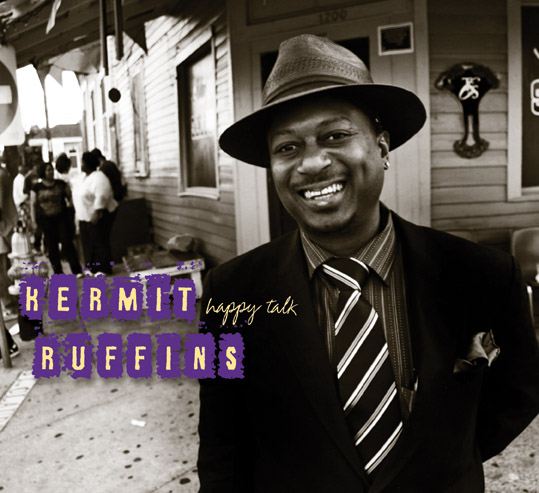
Village Voice: "Kermit Ruffins Couldn't Be Happier"

by Alex Rawls

Why the New Orleans icon is in no hurry to come to a city near you


"Nothing like barbecue between sets to pick up the band."Trumpeter Kermit Ruffins sprays a steady stream of lighter fluid on a small flame in his rolling barbecue pit, parked in front of Sydney's Saloon on St. Bernard Avenue in New Orleans. He's out of his usual suit and hat, wearing instead a white undershirt, jeans, rarely used white tennis shoes, and a kerchief. Ruffins has been an icon in New Orleans since his days with the Rebirth Brass Band; his recurring role on HBO's Treme further raised his profile nationwide. For visitors to the city, he is now emblematic of New Orleans' determination to have a good time, no matter what. Like today, for example: It's Monday afternoon—an off day—and he's in the mood to cook.


Before that, though, he's shooting the shit with guys on the corner, nursing a Bud Light, and prepping the grill for hot sausage later. He has a new album—" 'Hap-py talk, keep talkin' happy talk,' " he sings. "That's the title track. We put a second-line beat on it." But he's also got bats, balls, and his baseball glove in the back of his pick-up. "We've got a game every week," he says. "I'm the pitcher." After the game, he plans to return to Sidney's, the bar he owns in the Treme neighborhood, and grill out. When a neighbor opening a body shop across the street complains that he can't eat pork, Ruffins reassures him: "All-beef sausages. And once I start cooking, people bring other stuff—chickens, burgers."


The New Orleans–born-and-bred Ruffins was one of the founders of the Rebirth Brass Band in 1983, but he went solo in 1992. He is often likened to Louis Armstrong, but only as the good-natured embodiment of the Crescent City's mix of traditional jazz, the blues, and street-parade music. He'll travel if the price is right (mostly festival gigs, including a two-night stint at BAM in December), but he toured with Rebirth and doesn't feel the need to go through that again. He's got enough work in New Orleans, and he can do what he wants. Old friends from Clark Senior High School hang out at Sidney's—"We can talk about the same teachers and stuff that happened"—and he tailgates outside of Treme bars when the Saints play home games at the Louisiana Superdome. "I can't smoke reefer in the Dome," he says, his eyes widening conspiratorially. "It's better here. It's more convenient. It's more like a party."


Ruffins's grill is part of his identity. He cooks wherever he goes, even outside the studio during sessions. It's 12 feet long from trailer hitch to smoker, built in Atlanta for $4,200. A Saints window flag is duct-taped to its chimney. With a backing band called the Barbecue Swingers, it's a must, and he's had it for 10 years. Before that, he'd set up a grill in the bed of his truck when he played Thursday nights at Vaughan's in the Bywater. "Nothing like barbecue between sets to pick up the band," he says, laughing. "And it makes everything smell like a picnic." Oh, and by the way: "You know what else we did?" Ruffins sings: " 'What makes that little old ant/Think he can move that rubber tree plant?/High hopes/He's got hi-i-igh hopes!' " He mimics smoking a reefer and cracks himself up.


Happy Talk presents Ruffins looking outward. He's prone to celebrating the city, generally, and Treme, specifically, with tourist-bureau regularity, but there he leans on the standards and a band of New Orleans A-list talent that brings every track to life. He's a casual vocalist who settles for clichés more often than he should, but he's still the Pied Piper of Good Times for New Orleanians and New Orleanians at heart. In Treme's premiere episode, someone asks Ruffins, "Don't you want to be famous? Are you standing there telling me that all you want to do is get high, play some trumpet, and barbecue in New Orleans your whole damned life?" The answer: "That'll work."

Wednesday, August 11, 2010

Preview of Kermit Ruffins’ “Happy Talk”


Kermit Ruffins will release his new album, Happy Talk, October 26.
For those who can’t wait, here’s a free mp3 to download:

Tuesday, April 20, 2010

Offbeat Album Reviews

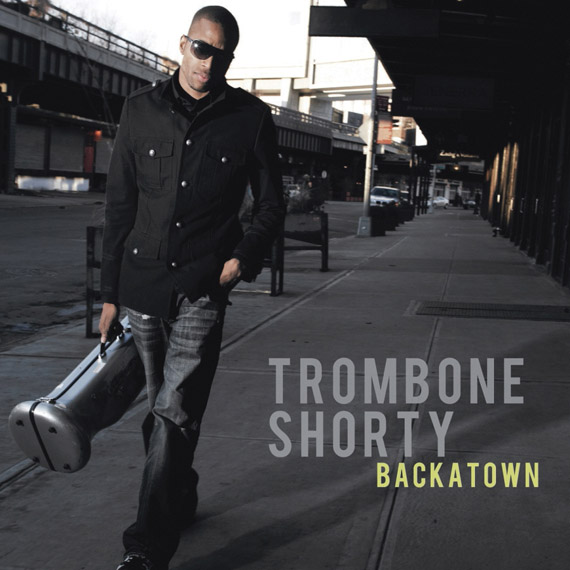
By Brett Milano on Trombone Shorty

It didn’t take a genius to peg Troy “Trombone Shorty” Andrews as a national success waiting to happen. He’s young, good-looking and a born entertainer, he was also making credible jazz records when he was barely out of puberty. His roots are in the Treme Brass Band circuit—which, if the HBO series Treme does its bit, will soon be in the national consciousness. But Andrews has already played to arenas, touring in Lenny Kravitz’s band and playing in the U2/Green Day number at the 2006 Saints home opener. All someone had to do was make a capital-C crossover album—maybe with a brass-hop version of “St. James Infirmary” on it—and wait for the money to roll in.

Backatown is definitely not that album, nor is it necessarily the one you’d expect from his live shows, which ride heavily on extended party jams. It’s a crossover set, but a creative one that doesn’t play to the tourists alone. Galactic’s Ben Ellman produces, and it’s up the same general alley as Galactic’s Ya-Ka-May, which placed loops, samples and bounce beats within the New Orleans R&B tradition. Backatown’s title track is clearly a studio creation with its looped drums, echoed guitar and synths, and a horn line that sounds flown in from a different recording, capped by a brief but fiery trombone solo. It sounds lively and catchy instead of overloaded, like one of those lucky accidents when two houses leave their windows open and the results mesh.

The cut-and-paste approach also works for the disc’s one familiar tune, Allen Toussaint’s “On Your Way Down.” There wasn’t much need for another faithful version of the song (Elvis Costello and Little Feat both nailed it in different decades) and this one (with Toussaint’s own piano at the heart of the mix) updates the groove and reworks the melody without losing the message, throwing some nifty “Shaft”- style flute into the bargain. Kravitz’s influence is clear on the other vocal tracks: “Something Beautiful” is the kind of Stevie Wonder/EWF homage that made Kravitz’s name, but sounds more like a hit than anything on his last two albums.

If there’s a problem here, it’s that Andrews and the band never stretch out. The longest of the 14 tracks on Backatown is 3:46—unheard-of brevity for nearly any modern album, much less a funk-based one. The power-chord driven “Suburbia” demands more than the three minutes it gets; “928 Horn Jam” has all the makings of a raucous old-school finale, but cuts off after 40 seconds. Maybe this is another nod to the Galactic audience, which figures that live tapes are for trading and that studio albums are the place to break ground.


By Alex Rawls on Sam Williams

Big Sam's Funky Nation, King of the Party (Hypersoul)Big Sam’s Funky Nation is not going to confuse you. On King of the Party, Sam Williams and company pick up the funk-rock blend that Trombone Shorty and Bonerama have been toying with and puts it in your face. Guitars on 10, arena rock drums and the horns blaring like they’re in the phone booth with you. No idea is complicated; when Sam wants to get funky, the Nation goes into James Brown mode for the unfortunately-titled “Krunked Up” (When grandmothers spoke of “getting krunk” during the playoffs, “krunk” lost all hip cred—if it had any left). When Sam wants to party, he declares himself the king of the party in the title cut then backs it up.

As you can imagine, we’re not going to learn life lessons from Big Sam’s lyrics, but this is visceral music. It’s made to be felt, not thought about, and as long as nothing’s off-puttingly dumb, it works. And nothing is; in fact, “See Me Dance” is a charming bit of self-mythologizing and one of the most compelling songs on the album.

King of the Party works because Big Sam knows who he is as a musician and embraces it. His charisma, exuberance and sense of joy translate to the album, which is good because they keep you hooked despite frustratingly low vocal levels throughout. On one track, it sounds like he’s singing through a CB radio, but the air of fun is such that even his dalliance with AutoTune is amusing.


By John Swenson on rock

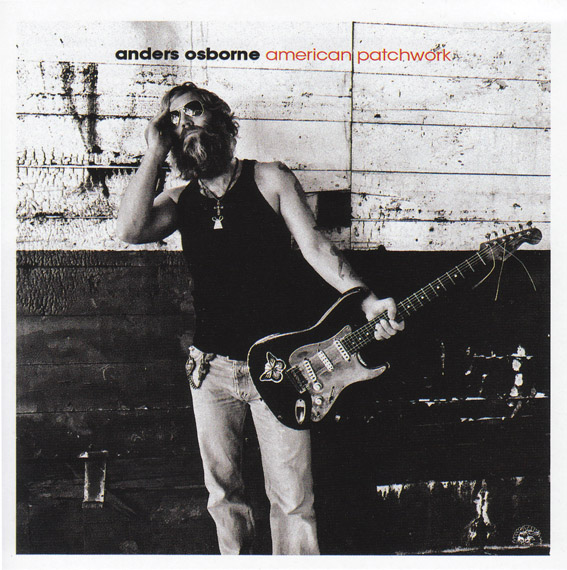
Anders Osborne, American Patchwork (Alligator Records)The rock era is pushing 60 and anyone who’s been listening carefully will have to admit that enthusiasm for contemporary releases can never include any believable claims of originality. That’s okay because much of the best rock is artful theft anyway. There remains plenty of room for personal expression, however, and there’s always a place for great songwriting.

Which brings us to Anders Osborne. His gifts as a guitar player are significant, and if one is led to make comparisons to Duane Allman, that’s hardly a negative. There are only so many notes that can be phrased so many different ways. But the human voice is something else; no two are the same. When that unique voice is used in service of personal expression so emotionally intense it feels like an explosion, you’ve really got something special.

American Patchwork is the album Osborne fans have been waiting for since Ash Wednesday Blues. The record is a triumph in several ways— as a coherent musical statement, as an account of one man’s struggle to transcend his own existential problems, as a tale of New Orleans loss and recovery, as a rumination on the entropic inevitability of death and a possible redemption by love. The back story is that it’s an album about recovery from substance abuse, but to leave it at that is like saying John Lennon/Plastic Ono Band was an album about primal therapy.

Osborne contrasts electric and acoustic modes artfully to express the roller coaster of emotions he takes us through on American Patchwork. The record begins with the ominous buzzing of multi-layered guitars that lead us “On the Road to Charlie Parker,” a hair-raising metaphor for genius cut down at the knees by heroin. Osborne keeps it terse and focused, adding to the drama by not overplaying it. He steps aside on track two to comment almost dispassionately on his condition as he sings the tuneful chorus of “Echoes of My Sins,” a song delivered here as a crunching electric shuffle but which sounds as if it could easily be sung as a straight pop melody.

Osborne contrasts his horror with the first of the redemptive tracks on the album, the simple reggae love song “Got Your Heart.” But Osborne is always an emotional recidivist, and we’re immediately plunged into the nightmare of “Killing Each Other.” The bad vibes continue as Osborne contemplates a desultory escape on “Acapulco,” a song about Mexico that Kenny Chesney will never record, then he offers a heartbroken tribute to a fallen friend on the remarkable hymn “Standing With Angels.” The line “You’re done raging against the light” sums up the condition Osborne is writing about with remarkable eloquence. In this chapter of Osborne’s life, there is a decidedly happy ending, expressed in the simple love songs that end the album, “Meet Me in New Mexico” and “Call On Me.”

Can one man’s search for salvation discover a redemptive path for a ruined city, an imperiled country, a world perpetually on the brink of disaster? Anders Osborne is not posing that question, but after living with American Patchwork for weeks now I can’t stop asking it myself. The album describes a process—the writer of these songs is balancing the baggage of what can’t be changed against the possibilities that lie ahead, all by wrestling with his emotions in the here and now. His personal experiences become universal observations in these songs, and the listener, by living vicariously through them, can confront his own demons. That’s not an original process, but it’s the living definition of great art.


By Aaron LaFont on Threadhead

Honey Island Swamp Band, Good to You (Threadhead Records)Maybe it’s because they formed in San Francisco; or maybe it’s because they seem more like a family than a band; or maybe it’s because of Chris Mulé’s lyrical guitar leads and Aaron Wilkinson’s raspy Bob Weir-like yowl, but the Honey Island Swamp Band’s gritty, bustling grooves recall mid- Seventies-era Grateful Dead—except these Big Easy boys spice things up with a splash of southern soul. Nearly a year removed from the release of their debut, Wishing Well, the band named after the marshlands just to the northeast of the Big Easy doesn’t miss a beat on their latest effort, Good to You, a sweltering, sunstreaked affair that sneaks up on you like a slow-rolling breeze on a sticky, summer afternoon.

Once again, the team of Wilkinson and Mulé split the songwriting and vocal duties, with Wilkinson at the helm for eight of the disc’s 13 tracks. His songs bear a looser, more rootsy feel, whereas Mulé’s tracks are steeped in soul and R&B. From the sizzling strut of “Chocolate Cake” to the relaxed ride of “Lose that Girl” to the swamp-rock swing of “Country Girl,” any which way you slice it, Good to You’s driving, working-man’s blues and soulful, honky-tonk shuffles make for some of the tastiest tunes coming out of the Crescent City today. “Rod n’ Reel,” the album’s best song, boasts the lines, “Some folks high on cocaine / Some folks stuck on weed / I’m hooked on my baby she’s got the only thing I need.” Now there’s a verse even Dead lyricist Robert Hunter would have been proud to pen.


By Tom McDermott on tuba

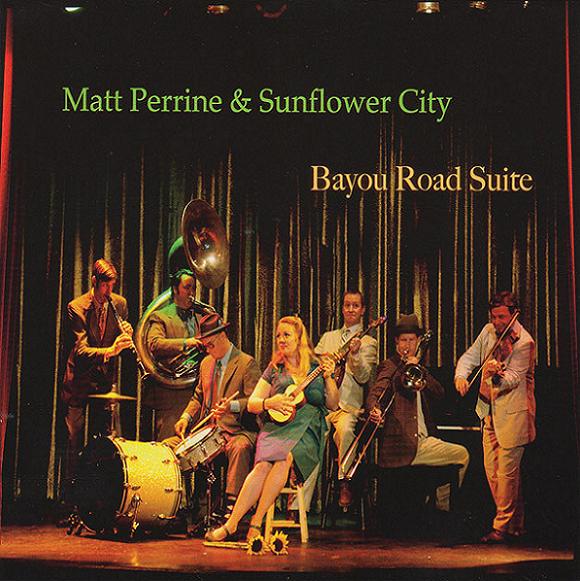
Matt Perrine & Sunflower City, Bayou Road Suite (Threadhead)New Orleans locals are familiar with sousaphonist Matt Perrine playing any style in any situation. His virtuosity brings forth the inevitable “I’ve never heard a tuba played like that” comment; then you take it for granted until you hear another tuba player.

Less noticeable, but apparent to his bandmates, are Perrine’s arranging and composing chops. He writes music as ably as anyone living in New Orleans, and at his best can be lumped in with the most sophisticated of our city’s expat player/arrangers: Wynton, Harry Jr., and Nicholas Payton.

The core of the Sunflower City band featured here is a delicious mix: banjoist Alex McMurray, fiddler Matt Rhody, Perrine on sousaphone and Ben Schenck, who has never sounded better, on clarinet. Add percussion by Michael Skinkus or Carlo Nuccio, and you have a unique timbre on chamber jazz pieces like “Rooster,” or the Joplinesque “Nocturne.” Skinkus, in fact, must be accorded star sideman status for his additional work on “Sougouya,” where he adds some Cuban sabor to a West African feel, as well as his pandeiro and cuica playing on the Brazilian “I’m Not Choro.”

As Perrine’s debut album demonstrated, he has a flair for Trinidadian calypso, and “My Goat,” written and sung with panache by St. Louis Slim, may be the most loveable track here. This Latinate material is exceptional, but in fact, Bayou Road Suite is more trad-jazzish than his debut from 2007, Sunflower City. As Perrine explains, “I just started writing trad material and couldn’t stop.”

From Trinidad to West Africa to Brazil and back to New Orleans: it’s quite a ride. Perrine’s first album was exceptionally well-received and there’s no reason to think Bayou Road Suite won’t exceed these expectations. With his playing, arranging and composing, he continues to raise the bar for traditional music with a New Orleans flavor.


By Dan Willging on zydeco

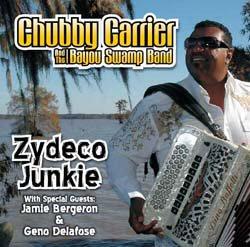
Chubby Carrier, Zydeco Junkie (Swampadellic Records)Chubby Carrier has spent a career perfecting his party package live shows, so it stands to reason that this would be more of the same, right? No, not quite. Carrier does do his best job ever reaching out to a diverse demographic with a variety of hooks. The breezy dance rendition of Bad Company’s “Feel Like Makin’ Love” will likely appeal to aging, knock-kneed rockers. On “My Zydeco Shoes,” modern country devotees will give thumbs up to Jamie Bergeron’s Nashville-radio-ready vocals. Additionally, there’s guitar-cranked funk, a peppy instrumental and poignant R&B. Carrier’s singing is much more focused this time out; the background vocals are full, crisp and tight while the Ivan Klisanin-engineered sound has the bottom-end smacking hard like it’s supposed to.

But keep in mind that while Carrier’s a third-generation zydeco musician, he’s not bound by his cultural music. The album’s biggest surprise arrives on “Touch Me Touch Me Baby.” Keyboardist Keith Clement alternates classic New Orleans piano fill-in with enchanting salsa melodies. Smart move, because if zydeco is going to continue to flourish, it needs more alliances with like-minded genres. Experimental fusion is encouraged and this is a step in the right direction.


By Aaron LaFont on Vital Signs

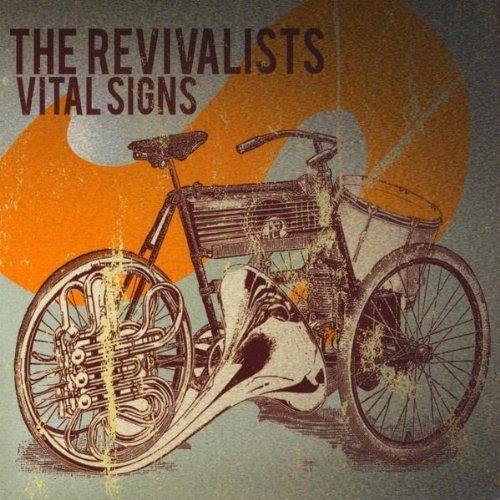
The Revivalists, Vital SignsThere’s a fine line between a jam band and a band that jams. New Orleans’ the Revivalists fall into the latter category. The group burst onto the scene in 2008 and honed their chops in 2009, expanding their live set as well as their songbook in the process. After spending some time in the studio, they return with Vital Signs, an album that brims with soulful melodies, explosive jams, and down-home rock ’n’ roll.

Singer Dave Shaw delivers an especially powerful performance here. His husky, fervent wail goes perfectly with the locomotive groove of “Ride the Earth,” a propulsive number whose lively acoustic breakdown and dancing sax fills calls to mind a more rocking version of the Dave Matthews Band. Earlier, his gripping rasp shimmers on “Strawman,” a tugging ballad with major crossover appeal.

Never showy or indulgent, the band tempers its virtuosity with calculated eruptions and nimble, intuitive punctuations. The racing atmospherics, winding guitars, and ricocheting rhythms of “Appreciate Me I” show why The Revivalists have also latched on with indie rock fans. Perhaps no song better captures the group’s inventiveness and creativity than “Soul’s Too Loud,” an intoxicating foray that emerges from a shadowy backbeat and a hypnotic guitar melody, only to be swept up into a collage of convulsive psychedelia.

The group does have a tendency to lean too heavily on their adolescent influences, sometimes pumping a little too much Nineties-alternative into their sound. Shortcomings aside, the Allman Brothers-flavored closer, “Hurricane Winslow,” lets you know that the next wave of Southern rock is in good hands.


By Alex Rawls on Threadhead

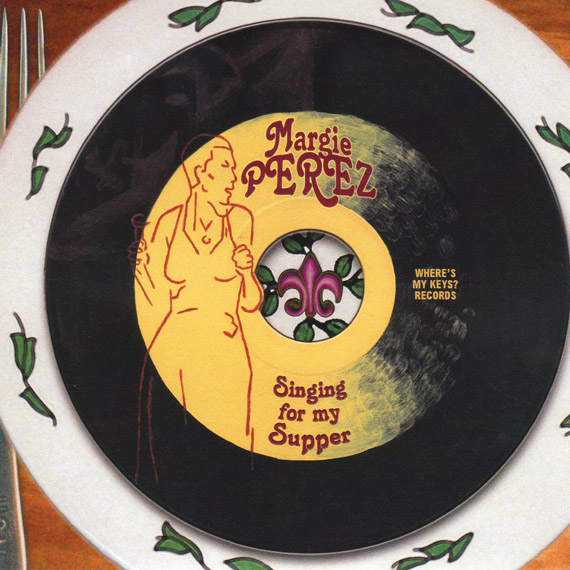
Margie Perez, Singing for My Supper (Threadhead Records)Margie Perez first released Singing for My Supper last year, but she has re-released it recently with three new songs. A big part of the fun of Perez is that she’s so sweet in person and in her delivery, but her lyrics are far randier than that persona would lead you to expect. “When I watch you move / I think, ‘What’s one night of sin?’” she sings in the new “You Ain’t the One for Me.” Those songs are set in the relaxed grooves generated by her three-piece band, and the space they create leaves room for her to help make the songs funky.

The new songs are the highlights of the re-release because they show her growth as a lead singer. At times on the initial release, she’s more of a backing vocalist—spot-on, but without the distinctive sound of a frontperson. On those occasions, the space left by the three-piece band felt like an empty living room where something is needed to make it go.

The tango-esque “Somebody Help Me,” on the other hand, plays with her sugary image, singing childlike “la la la”s in a song about trying to get over her ex. Her solution: “Like Uncle Sam / I need a new recruit.” Her wit and delivery there show someone in charge of her music and, it seems, her bed.


Thursday, January 14, 2010

R.I.P. Bobby Charles, writer of "Walking to New Orleans"

(c/o Offbeat/Music's Over)

Bobby Charles (Born Robert Guidry)
February 21, 1938 – January 14, 2010

jan 10 news bobby charles


Songwriter Bobby Charles passed away this morning; the cause has yet to be determined. The writer of “Walking to New Orleans” and “See You Later Alligator” had struggled with ill-health for years, including back problems and a bout with cancer that was in remission. Those problems led him to miss a scheduled appearance at the Ponderosa Stomp in 2004 and Jazz Fest in 2007. Evidently he fell recently and was bedridden as a result. It was after that fall that he died.

He also wrote “(I Don’t Know Why I Love You) But I Do” which was recorded by Clarance “Gatemouth” Brown and received prominent placement in the Forrest Gump.

Charles had completed work on a new album, which is due out next month.

More when we know more.

For more on Charles, here’s Scott Jordan’s 1998 feature story on Charles, Geoffrey Himes’ guide to Charles’ writing, an interview Alex Rawls did with him in 2007, and a feature he wrote for Blurt after the release of 2008’s Homemade Songs. Here’s a review of Homemade Songs.


Tuesday, December 1, 2009

NolaFunky Album Reviews c/o Offbeat Magazine

By Alex Rawls

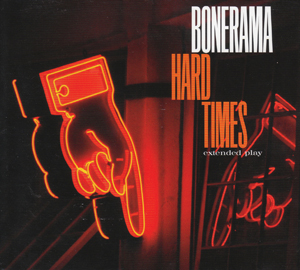
reviews.bonerama
Hard Times is Bonerama’s first studio recording after three live albums, and moving the band to the studio poses a number of challenges beyond maintaining the groove and vibe that comes with performing live. In concert, Bonerama’s as loud and physical as many guitar-based rock bands, partially because of similarities between the range of the trombone and the electric guitar, and because Bonerama plays loud. At Jazz Fest, the band’s music frequently bleeds over to adjoining stages, particularly when it’s windy. How do you capture something that intense in the studio?

To their credit, they don’t try. Instead, the five-song EP is an introduction of the things Bonerama does—a Mark Mullins song, a Craig Klein song, a funky instrumental, and two covers. One represents the sort of thing they’re known for—”When the Levee Breaks”—and one’s a broadening of their repertoire— Bobby “Blue” Bland’s “Turn on Your Love Light.” They only roll out their piledriver weight for the Led Zep cover; otherwise, they’re content to be a solid funk band and are exactly that. Mullins’ title cut is a bit poppier, Klein’s “Lost My House” has a bit of a Neville groove, but those tracks move more nimbly than you’d expect after one of their classic rock covers.

Lyrically, Hard Times catches what seems like a transitional moment. Because of Klein’s association with the Arabi Wrecking Krewe and his own loss in the post-Katrina flood, the band has been heavily associated with the hurricane, and “When the Levee Breaks” certainly reinforces that connection. Mullins and Klein’s songs both reference hard times and loss, but both seem to be looking for where to go from here. Both lyrics get a little hazy, either in their vagueness or privacy, but Bonerama is one band that really has remained in development since conception, even though it found its sound fairly early. Hard Times hints at where a band in constant transition might go next.


By Alex Rawls

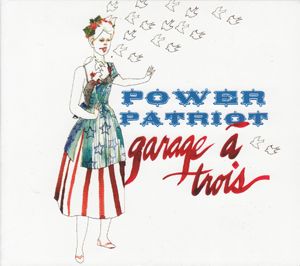
reviews.garageatroisPart of what has set Garage a Trois apart from other jam/jazz/ funk aggregations is its intelligence and ability to follow through on a concept. 2005’s Outre Mer presented itself as a soundtrack to a French movie that didn’t exist, but it was done well enough to make the charade seem possible. On the new Power Patriot, the sound has changed a bit—Marco Benevento’s keyboards have replaced Charlie Hunter’s guitar—but the same governing intelligence remains. Enough attention is paid to the sound of each instrument in each song that each remains discrete, unified by a musical sensibility, not by the sameness of the instrumentation.
As the title implies, Power Patriot is often a muscular record. “Fragile” is anything but, and “Rescue Spreaders” is as disorientingly distorted as anything on the Flaming Lips’ Embryonic. It’s also often a very melodic album thanks to Mike Dillon’s vibes-based compositions. The highlight is “Dory’s Day Out,” a rather sweet piece that recalls the work of a number of Brian Wilson- influenced bands (the High Llamas come to mind).

On occasion, the album toes the waters of prog rock and Zappa-esque jazz, minus the Zappa, but its beauty is that the compositions rarely sound like set-ups for solos. Even at six minutes on the album, there’s a clear purpose for each piece that rarely includes lengthy solos. If anything, a few of these tracks could use someone to step out and burn for a bit.


By John Swenson

reviews.paulsanchezThe Threadhead Records phenomenon has reshaped the profile of the local recording industry, allowing veteran musicians to make albums that might otherwise not have happened, giving deserving new artists a jump start on their careers and even producing such delightful one shots as this year’s Christmas release. No musician has benefited from this breakthrough more than Paul Sanchez, who has established himself as an important solo artist since leaving Cowboy Mouth with no small help from the label. This is the third Threadhead-financed album Sanchez has made,
and each has been remarkably different.

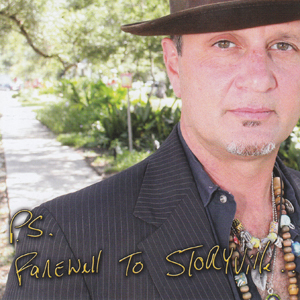
Sanchez has been preparing to make Farewell to Storyville his whole career. It’s an impromptu,
mostly solo session in which Sanchez tells stories about each song before singing it, a standard folk music format that he’s perfectly suited to. When Sanchez left his New Orleans home for New York City in the 1980s to make his mark as a songwriter at the height of the fast folk and anti-folk movements that emerged out of the city’s post-punk club ethos, he played numerous gigs that resembled this session. In fact, one of the songs here, “Breaking My Back Up Front for You Baby” was written during that period. Toward the end of his run with Cowboy Mouth, he began playing acoustic house parties that also mirrored the shape of these performances. Folk music of this type is often autobiographical and there’s no shortage of such material here.

“Gonna play you some songs and tell you some stories,” he begins by way of introducing
“Knives to Grind,” a reminiscence from his childhood in the Irish Channel. “I Dreamed I Saw My Father,” a song with the feel of a Fred Neil ballad, is a bittersweet rumination on a man Sanchez says he really didn’t know. He explains how Lillian Boutté introduced him to “Farewell to Storyville,” a song about days gone by that Sanchez gives a languid reading with vocal support from Debbie Davis. The song is poignant in New Orleans today, a point Sanchez brings home by following it with “Falling with Nowhere to Land,” a post- Katrina lament. “It’s my story,” he says. “It’s our story, it’s anybody’s story that’s lived here in the last few years.”

Sanchez brightens the mood with the merry Spanish language tune “Mota Mota Mota,” a reflection of his time spent in Central America after the storm. Themes of displacement, grief and plain old mental maladjustment continue to float through the album, taking different shapes. He lightens the mood, though, with the comic “Walked in the Club with Twenties” and sends everyone home smiling with the dark humor of “Enjoy Yourself, It’s Later Than You Think.”

When a record like this works, you leave it feeling you’ve learned something intimate about the singer’s life, like a good conversation with a friend. Sanchez will have a lot of new friends after they listen to Farewell to Storyville.


Sunday, May 3, 2009

Jazzfest Recap Roundup

Too many articles, too little time...


Corey Henry - New Orleans Jazz & Heritage Festival 4/25/09


Nola.com: New Orleans Jazzfest


e


Keith Spera (Times Pic)


Alex Rawls (Louisiana Music Directory)


Groovesapes


Big Chief Monk Boudreaux


NY Times ArtsBeat Blog: Jazzfest


Walter "Wolfman" Washington - d.b.a. New Orleans 4/22/09


Dino Perruci Photography


Zigaboo Modeliste & Stanton Moore - Tipitina's, New Orleans 4/27/09


Leo Nocentelli & George Porter Jr. - Tipitina's, New Orleans 4/27/09

Between The Grooves


Golden Blade Mardi Gras Indians - New Orleans Jazz & Heritage Festival 4/25/09


Burning Wood


Golden Eagle Mardi Gras Indians - New Orleans Jazz & Heritage Festival 4/26/09


GA-Photos


Uncle Lionel Batiste - Frenchman Street, New Orleans 4/28/09


Music On My Mind


Kirk Joseph - New Orleans Jazz & Heritage Festival 4/30/09


Nola Rev


Rock & Roll Hoo-Ha What What