Tuesday, September 13, 2011

Tomorrow: Trombone Shorty & Orleans Avenue @ The Box

Trombone Shorty & Orleans Avenue

Trombone Shorty & Orleans Avenue


Wed, September 14, 2011

Doors: 6:00 pm / Show: 7:00 pm

The Box

New York, NY

$35 General Admission


Rare indeed is the artist with the virtuosity to draw the unqualified respect of some of the most iconic legends in jazz and the ability to deliver a high-energy funk rock show capable of mesmerizing international rock stars. Troy "Trombone Shorty" Andrews is one such artist - and there is no one else like him.

Trombone Shorty is equally adept on trombone and trumpet and is a man to be reckoned with on both. A product of New Orleans' culturally rich Treme neighborhood, Trombone Shorty was a bandleader by the age of six.

While navigating New Orleans with his band in tow, he was also absorbing lessons from his older brother James, a dynamic musical performer known as "Satchmo of the Ghetto." By the time Trombone Shorty was twelve, he had a Ph.D. in the ways of the streets, which you can still hear in his music.

During a visit to a small New Orleans club, Bono and the Edge saw the 12-year-old trombone player. "We walked in and the place was jumping. There was this little funk band, but they were all playing brass instruments, which is something I'd never heard of or seen before," The Edge recalled. "We were just mesmerized by him. I ended up with Bono, after a few tequilas, dancing with a bunch of girls on the top of the bar. It was one of those sort of nights."

Now, at 23, Trombone Shorty has grown into a performer who commands the stage while emanating an elegance and class gleaned from his successful studies at the prestigious New Orleans Center for the Creative Arts. As a graduate, he joined the ranks of alums like Branford Marsalis, Harry Connick Jr., and Nicholas Payton. Another alum, Wynton Marsalis, said of him, "Troy possesses the rarest combination of talent, technical capability and down home soul. I'm his biggest fan."

Shorty has attracted many such legends to his high-profile fanbase, and the diverse and notable names he has performed and soloed with include Norah Jones at Jazzfest 2007, Diana Krall at Madison Square Garden in 2005, and chart-topping rapper Juvenile at VoodooFest 2008.

In 2009, New Orleans' premier music magazine, Offbeat, awarded Trombone Shorty & Orleans Avenue Best R&B/Funk Band for the second year in a row. Trombone Shorty himself picked up an award for Best Trumpet and he has been named Performer of The Year twice. His success - and his promise - has been recognized by the New Orleans Jazz & Heritage Festival on one of the Fest's two annual official posters. He is the youngest artist to be featured on the poster by 18 years - the next youngest was Wynton Marsalis, who was featured at age 41.
The four years leading up to being tapped for the Jazzfest poster saw Trombone Shorty's profile grow virtually month-by-month. In 2005, he was tapped by Lenny Kravitz to be a featured member of his horn section for the 63-date Electric Church world tour that in North America supported Aerosmith's Rockin' the Joint tour.
In London in 2006, Trombone Shorty worked with producer Bob Ezrin and U2 at Abbey Road Studios. This association led to Trombone Shorty performing with U2 and Green Day during the New Orleans Superdome's post-Katrina re-opening spectacular during Monday Night Football. The show aired live on ESPN and was also broadcast internationally by Westwood One.

Also in 2006, Trombone Shorty made his acting debut on the NBC television series Studio 60 on the Sunset Strip. Leading a group of New Orleans musicians, his haunting trumpet performance of the holiday classic "O Holy Night" drew such an enthusiastic response from viewers that NBC released the single for free download on the NBC.com home page.

Trombone Shorty has been profiled by Good Morning America and USA Today and was featured on "Whole Lotta Loving," a collaboration with Lenny Kravitz for the 2007 album Goin' Home: A Tribute to Fats Domino. When the 2008 NBA All-Star game was played in New Orleans, he was tapped to play on court during player introductions, along with Harry Connick Jr., Kermit Ruffins, and Branford Marsalis.

THE FUTURE IS SUPAFUNKROCK

The here and now finds Trombone Shorty a fully developed performer bursting into the international consciousness. It's always a challenge to find an appropriate label for artists who make something uniquely their own from a variety of influences. In the case of Trombone Shorty and Orleans Avenue, the band created its own tagline for its high-octane music: SupaFunkRock. The group's performances have been known to run for hours at an energy level that few others could sustain for a much shorter performance.

The seeds for Orleans Avenue were sown at New Orleans Center for the Creative Arts, and the group has since evolved into a six-piece touring phenomenon. With Mike Ballard on bass, Pete Murano on guitar, Joey Peebles on drums, Dwayne Williams on percussion and Dan Oestreicher on baritone sax, their performances transcend the boundaries of generation and classification. Trombone Shorty and Orleans Avenue have been drawing ever-growing crowds based largely on word of mouth excitement about their knockout shows, night after night. Making the most of limited time off, they are currently recording new songs that capture the band's rare combination of virtuosity and high-energy party intensity - the next accomplishment to watch for in the career of this unparalleled young artist.

Tuesday, September 6, 2011

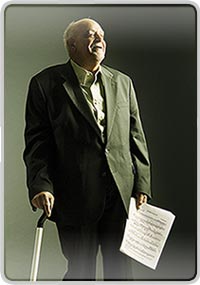
RIP: Wardell Quezergue, R&B Great

New Orleans arranger, producer and bandleader Wardell Quezergue passed away this morning at East Jefferson Hospital in Metairie at age 81. The cause of death is not yet known, but Quezergue was in declining health in recent years.

Wardell Quezergue. Photo by Greg Miles.

Wardell Quezergue. Photo by Greg Miles.

Quezergue arranged and produced many soul and R&B classics, including Professor Longhair’s “Big Chief,” Robert Parker’s “Barefootin’,” Phil Phillips’ “Sea of Love,” the Dixie Cups’ “Chapel of Love,” King Floyd’s “Groove Me,” Jean Knight’s “Mr. Big Stuff” and Dorothy Moore’s “Misty Blue.” When OffBeat‘s John Swenson interviewed him in late 2007, he recalled how he and drummer Smokey Johnson wrote the New Orleans’ classic, “It Ain’t My Fault”:


We had an office on Orleans Avenue and he came in and he said “Quiz”—he used to call me Quiz—he said, “I have something I want you to hear. I want you to record this on me.” “Okay, let me hear it.” He started to diddle with his hands on my desk—dump de-dump dump dump diddle ump de-dump dump dump. I said, “That’s a good beat. Where’s the melody?” He said, “That’s where you come in!”


In his later years, Quezergue and Johnson were involved in a lawsuit over unpaid royalties for the song. The suit was settled earlier this year.


Despite being legally blind since 2005, he continued to work as much as he could. When the Ponderosa Stomp arranged for Quezergue’s orchestra to perform, he would write new charts by dictating them to his son, Brian. In our current issue, the Stomp’s Ira Padnos remembers asking Mac Rebennack if he would perform “Storm Warning” and some of the guitar-based songs he recorded before adopting the Dr. John persona at the 2008 Stomp. “As long as Wardell [Quezergue] does the arrangements, I’ll be willing to take a stab at it, ” said Rebennack, who also had Quezergue do the arrangements for his 1992 album “Goin’ Back to New Orleans and 2004′s N’Awlinz: Dis Dat or d’Udda.


Quezergue’s signature was the bigness of his sound, using large horn sections and strings. He was known as “the Creole Beethoven,” but he explained the nickname’s origins to Swenson with gentle, self-mocking humor:


The thing with [Professor Longhair] is this: Fess, he had to sing live, he never did overdubs as far as I know. I think that was one of the reasons Earl [King] sang on “Big Chief.” That was the first time I worked with the Professor. “Big Chief” had five saxophones, three trumpets, three trombones and five rhythm parts. Artists weren’t used to working with bands like that. I guess that’s how I got the nickname “Creole Beethoven”—not because I’m so brainy; it’s just that everything I did was so loud.


Quezergue was given an honorary degree by Loyola in 2009, and his career was celebrated in New York City that July in an event at Alice Tully Hall.

Tuesday, August 23, 2011

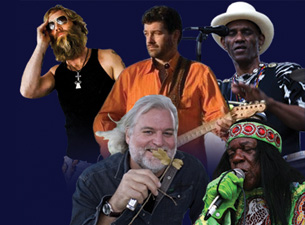
Voice of the Wetlands All-Stars this Thursday @ Hiro Ballroom


Voice of the Wetlands Allstars: Tab Benoit, Anders Osborne, Cyril Neville, Big Chief Monk Boudreaux
, Jumpin' Johnny Sansone, Waylon Thibodeaux & more

Event Image

VOICE OF THE WETLANDS ALL-STARS SUCCESSFULLY COMPLETED THEIR FIRST WESTERN U.S. TOUR WITH RAVING REVIEWS AND SOLD OUT SHOWS FROM BOULDER, CO TO SAN DIEGO, CA, AND UP THROUGH SEATTLE, WA. TAB BENOIT, CYRIL NEVILLE, ANDERS OSBORNE, JOHNNY VIDACOVICH, BIG CHIEF MONK BOUDREAUX, JOHNNY SANSONE AND WAYLON THIBODEAUX EMBARKED ON A 16-DATE TOUR IN TWENTY-ONE DAYS TAKING THEIR MUSIC AND MESSAGE OUTSIDE OF LOUISIANA.


THE ALL-STARS' PHYSICAL, DEMANDING PERFORMANCE PRESENTED A POWERFUL BLEND OF SOULFUL BLUES, NEW ORLEANS FUNK, HOODOO RHYTHMS, CAJUN ZYDECO, AND GRITTY ROCK. AUDIENCES EXPERIENCED A SHOW ONLY PREVIOUSLY SEEN AT THE NEW ORLEANS JAZZ AND HERITAGE FESTIVAL.


LEAD BY VOW FOUNDER, TAB BENOIT, THE VOW ALL-STARS ACHIEVED MUSICAL SUCCESS, AS WELL AS GAINED NATIONAL SUPPORT AND ACTION IN RESPONSE TO THE CRISIS OF LOUISIANA'S WETLANDS. BENOIT'S WORDS AND THE ALL-STARS' MUSIC INFLUENCED AUDIENCES IN ALL SIXTEEN MARKETS. PEOPLE OUTSIDE OF LOUISIANA WERE MOTIVATED TO CARE AND TAKE ACTION FOR A DOMESTIC CRISIS THAT ULTIMATELY AFFECTS THE ENTIRE COUNTRY - ENVIRONMENTALLY, ECONOMICALLY, AND CULTURALLY. WHILE THE VOW ALL-STARS ARE MUSICIANS BY TRADE, THEY HAVE BECOME THE AMBASSADROS OF LOUISIANA'S FIGHT TO PROTECT AND PRESERVE A NATIONAL TREASURE AND A VITAL PART OF THE U.S.

Other upcoming NolaFunky shows...

Thursday, August 18, 2011

The Economist Q&A: Galactic, a funk band

That New Orleans sound

The Economist Q&A: Galactic, a funk band


WHEN performing live, Galactic makes playing funk music look easy. It isn't. Delivering precise, tight funk is hard work, but this five-piece New Orleans band seems to power through their shows as if they could keep it all going endlessly. Their most recent album, "The Other Side of Midnight: Live in New Orleans", captures that energy and plenty of the flavour of the Big Easy. It was recorded during a sold-out show at Tipitinas, a legendary local club, and features some well-known local musicians such as Cyril Neville and Trombone Shorty.

Galactic has a unique sound built from eclectic influences—jazz, rap, electronica, jam-band music and bounce (a local take on hip hop)—honed over years of performing live. They have shared the stage with B.B. King and The Roots, among others, and they have recorded with a variety of other artists. "From the Corner to the Block" (2007) featured a slew of rappers and MCs including Boots Riley of The Coup and Gift of Gab from Blackalicious.

But the band remains devoted to the New Orleans music scene and often collaborates with local talent. "Ya-Ka-May" (2010), the last album, was a love letter to the city (named after a traditional New Orleans soup). “The Other Side of Midnight” is a fine follow-up, but still no match for seeing these guys in person.

Now on a world tour, the band's guitarist, Jeff Raines, answered a few questions from the road via e-mail about the new album, the music of New Orleans and learning from other musicians.

Why did you decide to make a live album from New Orleans?

We recorded our new album for a multitude of reasons. First and foremost is that we live here and wanted to record in the most comfortable environment possible. We also wanted to have options in terms of inviting our musician friends from around town to come play. Our own studio is close by. We did our first live album at Tips exactly ten years ago so we felt like it made sense on that level as well.

From a musical or cultural standpoint, what's changed in New Orleans since Hurricane Katrina?

From a musical standpoint I don’t think all that much has changed since the storm. Certainly in the first few years there were less people playing music and going out to the clubs. These days the club scene seems pretty vibrant. There are new brass bands popping up and the bounce rap scene has been getting some national attention.

How does your new album reflect New Orleans music and culture as it is today?

I think this record reflects what Galactic has been doing recently. We have been touring with a fantastic trombone player so we are bringing a more full-bodied horn section feel. Having Cyril Neville on the show singing at that venue also strikes me as being something special to New Orleans.

How have collaborations changed your sound or approach to songwriting?

When we go into our demo-writing process the material that might lend itself to having some kind of vocal element becomes obvious. We sometimes will send the artist we are working with a few ideas and go from there.

What sets funk apart from other music genres? What makes funk "funk"?


I guess funk represents a certain feel in music that usually makes you want to get up.

What is Galactic's version of funk? How is your music unique?

We’ve been able to develop a sound over many albums and years of touring. I think a lot of that comes about through a shared history of playing shows together.

You've sometimes been called a "jazz jam" band. Do you embrace that or shrug it off?

We don’t pay much attention to names the media invent to try and classify what we are doing.

What's the most recognisable way New Orleans has shaped the sound of your band?

Through the songs we’ve learned and then done our own versions of. We’ve always covered songs by local brass bands or our local musical heroes. I think learning all this music has affected us as a band.

Galactic is now on tour. The band is at work on their next studio album, to be released next spring.

Monday, August 8, 2011

Newport Jazz 2011: Trombone Shorty & Orleans Avenue, Live In Concert


Listen to the set HERE.


Trombone Shorty performs with Orleans Avenue on the Quad Stage during the Newport Jazz Festival.


In New Orleans, jazz is a building block, a musical foundation. Troy Andrews, aka Trombone Shorty, fully embraces the future-funk and grimy rock backbeats which bring crowds to their feet. But at his core, he's also a phenomenal jazz trombonist and singer from the Tremé neighborhood. Stardom awaits with the upcoming release of For True; here, Trombone Shorty and Orleans Avenue preview their headlining Newport Jazz Festival set with this more intimate Quad Stage show.


Personnel: Trombone Shorty, trombone/trumpet/voice; Tim McFatter, tenor saxophone; Dan Oestreicher, baritone saxophone; Peter Murano, guitar; Michael Ballard, bass; Robert Peebles, drums; Dwayne Williams, percussion.


Tuesday, July 26, 2011

Bluegrass and Jazz Bands, With More in Common Than You’d Think


Michelle V. Agins/The New York Times

Del McCoury’s bluegrass group and the Preservation Hall Jazz Band did the proper adult thing on Wednesday night: they resolved their differences, surrounded by expensive claret.

On “American Legacies” (McCoury Music), their recent joint album, they’ve explicitly made their traditions melt together. This is an old story. Louis Armstrong did it with Jimmie Rodgers; Wynton Marsalis did it with Willie Nelson. The pairing is not a stretch, though it can seem to be. For the first half of the 20th century bands from putatively different traditions implicitly understood their common origins and points of crossover. And their repertories overlapped. Type in the song title “Corrine, Corrina” on YouTube and you’ll get Red Nichols’s jazz version, Bo Carter’s string-band blues version, and various shades of country into rock ’n’ roll from the Collins Kids, Ray Peterson, Brooks & Dunn, Big Joe Turner, and Jerry Lee Lewis.

Or you could do the same with “Milenberg Joys,” which the combined bands played near the end of their set at City Winery on Wednesday. It’s a song that Mr. McCoury — raised in the Black Mountain region of North Carolina — knew because he used to play it in Bill Monroe’s band, and the jazz group knew because Jelly Roll Morton wrote it. (The dynastic Preservation Hall band, from New Orleans, was founded in 1961 by Allan and Sandra Jaffe, parents of its current tuba player and director, Ben Jaffe; it has no original members, but the current lineup is full of familial and professional ties to the group’s past.) In that song, and in a few other places, the musicians did right by the audience: they made music subtly pan across the stage, from one band to another, so you could hear the difference in rhythmic temperament, whether in grooves or in solos.

At full strength 12 musicians stood onstage, jazz guys to the left, bluegrass to the right. The Preservation Hall band used funk and parade beats and slid into the beginning of each bar, making the “one” indistinct; by contrast, Mr. McCoury’s group bit down hard on it.

Although Mr. McCoury filled half the set with his high, clean, no-nonsense voice, there was a lot more Preservation Hall in the mix; trumpet, trombone, saxophone and tuba walked all over guitar, banjo, mandolin and string bass. (The singing styles of the Preservation Hall musicians — the trumpeter Mark Braud and the saxophonist Clint Maedgen — take up more space than Mr. McCoury, through various shades of showiness.) And the Preservation Hall band’s strong drummer, Joe Lastie, stamped an irrefutable, seductive groove deep into each song.

There were lessons and discoveries in all of that, but you wouldn’t want to overthink it; the music was too amiable and easy to like.

NY Times: At 100, [Lionel Ferbos is] Still Keeping Time as the Leader of the Band

By DAVE THIER


NEW ORLEANS — At midnight last Saturday, friends and well-wishers sang “Happy Birthday” to the trumpet player who led the band that night at the Palm Court Jazz Cafe. When they finished, the trumpet player turned to a few young women sitting behind him.

“Have you ever kissed a hundred-year-old man?” he asked.

The next night, jazz royalty from around the city turned out for Lionel Ferbos’s birthday party, amazed that one of their colleagues could have made it a full century. The wide Ferbos brood of tan-skinned Creoles with thin faces, pointy noses and impossible grace dominated the room, but men in seersucker suits with white straw hats and other appropriate characters filled it out. It being New Orleans, there was also a sparkly gold top hat, a red feathered sash and copious fleurs-de-lis.

Mr. Ferbos himself, with a brown suit, thick plastic glasses, deep jowls and bushy eyebrows, held court in the middle of the room, collecting birthday cards and hundred-dollar bills to pin to his chest in the New Orleans birthday tradition.

After a little while, he took the stage the way he has done every Saturday night for two decades, crooning old standards in a smooth, muddy voice. The bands are smaller than they were in the 1930s, he says, but most everything else is the same.

“It’s the same music,” he said. “We’re playing the same numbers we were playing 80 years ago.”

In a city obsessed with keeping its particular past breathing into the present, Mr. Ferbos stands as a rare example of the long journey that early jazz has taken to come to 2011 intact. He and his songs have stayed the same not just through Hurricane Katrina, but through Hurricane Betsy and the flooding in 1995 as well. They saw Vietnam, World War II, the Great Depression (he is the last surviving member of the New Orleans Works Progress Administration jazz band) and the invention of rock and roll. His face shows some of the wear of eight decades of playing. His music does not.

After the break, some local celebrities in attendance took the stage and modernized the music by a couple of decades. James Andrews, “The Satchmo of the Ghetto,” worked the crowd as audience members pulled out parasols and napkins and started parading. Irvin Mayfield, a bandleader and club owner, joined him in a slim-cut black suit and a white shirt with no tie.

Mr. Ferbos stayed in the corner, his knees bouncing in time with the music, his face occasionally appearing behind the outsize personalities dancing in front of him.

Mr. Ferbos was never a star. Until his considerable talent for longevity eclipsed his musical prowess, he was always an ensemble player. He played dance halls when his music was pop, and sit-down restaurants like the Palm Court later on. Unlike nearly every other musician in the city, he still reads his melodies off sheet music. He started playing before Louis Armstrong made improvising popular.

He was a worker, and still is, practicing every day to stay sharp. At his party, much younger men were yawning while he was still receiving a near-endless stream of birthday wishes.

A man went up to him and said, “Hope to make it next year!”

“Me too,” Mr. Ferbos replied, and laughed.